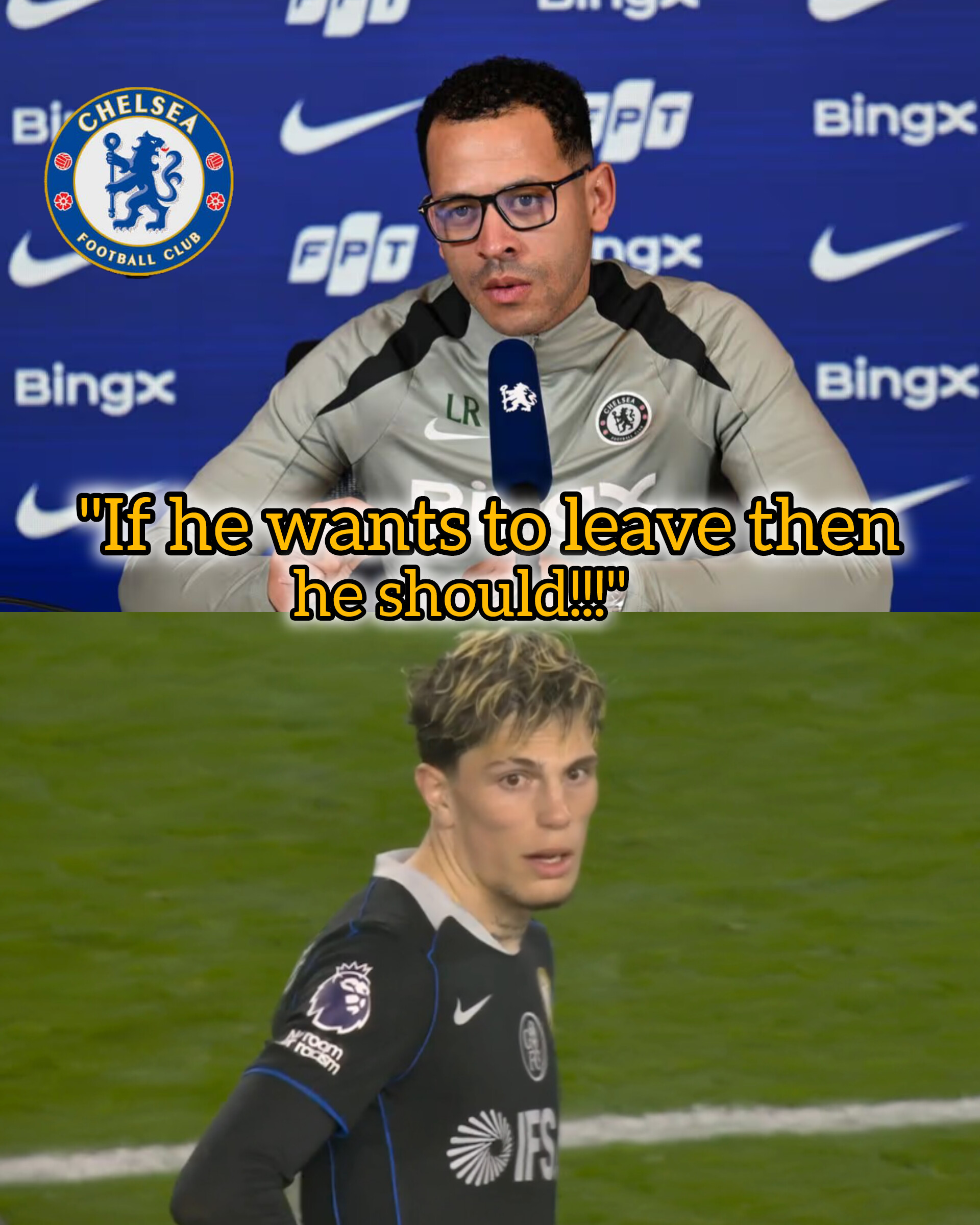
If he wants to leave then he should leave instead of playing like an amateur! I can’t defend that performance!” — A furious Liam Rosenior has reportedly turned on Alejandro Garnacho after Chelsea’s humiliating 3-0 collapse against Brighton!

The atmosphere surrounding Chelsea Football Club has reached a fever pitch of internal discord following a demoralizing 3-0 defeat at the hands of Brighton & Hove Albion. In the immediate and volatile aftermath of the collapse, Chelsea manager Liam Rosenior reportedly reached his breaking point, directing a searing critique toward star winger Alejandro Garnacho. In a post-match post-mortem that has reverberated through the dressing room, Rosenior signaled a stunning departure from the usual managerial protection of players, essentially inviting the Argentine international to seek a future elsewhere if his commitment to the badge remains in question.
An “Amateur” Display in a Professional Arena
The catalyst for Rosenior’s fury was not merely the result, but the perceived lack of competitive spirit displayed by Garnacho during the ninety minutes on the South Coast. Observers noted a performance characterized by defensive lapses, disinterested tracking back, and a general air of detachment—traits that Rosenior characterized as “amateur.”
The manager’s rhetoric was devoid of his usual tactical nuance, replaced instead by the raw frustration of a coach who feels his tactical plan was undermined by a lack of basic professional effort. By invoking the term “amateur,” Rosenior hit at the very heart of the player’s reputation, suggesting that Garnacho’s recent outings have fallen catastrophically short of the standards expected of a top-flight professional at a club with Chelsea’s ambitions.
The Ultimatum: Commit or Depart
In what many are viewing as a “line in the sand” moment for the current regime, Rosenior’s comments served as a public ultimatum. The manager made it clear that he has no intention of defending performances that lack the requisite intensity, regardless of the player’s individual talent or market value.
“If he wants to leave, then he should leave,” Rosenior reportedly fumed, addressing the persistent rumors linking the winger with a move away from West London. “I can’t defend that performance. We are fighting for the integrity of this club, and playing like an amateur is an insult to the supporters and the teammates who are actually putting in the work.”
This blunt admission suggests that the relationship between the manager and one of his most high-profile creative assets has deteriorated to a state of near-irreparability. Rosenior’s refusal to provide “managerial cover” indicates that the internal patience for Garnacho’s perceived moodiness has finally evaporated.
A Club in Turmoil
The 3-0 loss to Brighton served as a grim backdrop for this internal explosion. Chelsea’s performance was widely panned as disjointed and toothless, but it is the fallout between Rosenior and Garnacho that has captured the headlines. For a squad already grappling with consistency issues and the pressure of a demanding season, this public fracture threatens to derail the team’s remaining objectives.
The “humiliating collapse” against the Seagulls has laid bare the fragility of the current Chelsea project. While Rosenior is attempting to instill a culture of discipline and accountability, the Garnacho situation highlights a significant hurdle: managing high-profile egos who may already have one eye on the exit door.
The Road Ahead: A Point of No Return?
As the dust settles on the Brighton defeat, the question remains whether Garnacho can find a way back into Rosenior’s plans or if this outburst marks the beginning of the end for his career at Stamford Bridge. For Rosenior, the message is clear—he would rather move forward with a squad of committed professionals than cater to a star who appears mentally checked out
