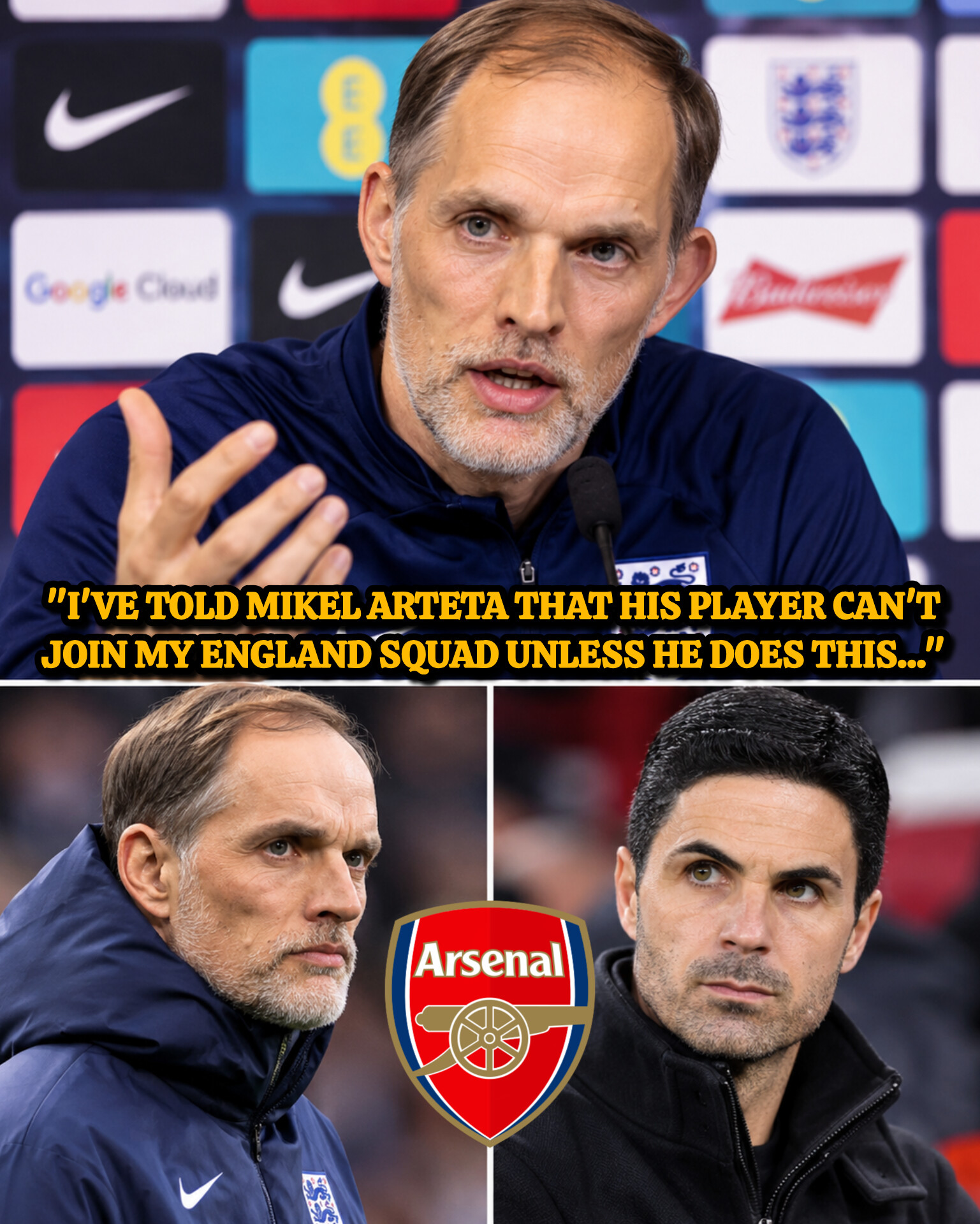

Tactical Cold War in North London: Inside Thomas Tuchel’s Shocking Arsenal Snub
The flashbulbs usually flatter the national team manager on squad announcement day. There are soft-focus smiles, diplomatic platitudes about “form cycles,” and carefully hedged answers designed to keep club bosses happy.
Then there is Thomas Tuchel.
Seated behind the microphone at St George’s Park, the England manager didn’t just draw a line in the sand; he detonated a tactical landmine that has sent shockwaves straight through the heart of North London.
With one cold, unapologetic declaration, Tuchel made it abundantly clear that European glamour and highlight-reel goals mean precisely zero if a player fails his stringent defensive checklist.
The Press Conference That Stunned the Capital
The atmosphere in the media room shifted from routine to electric the moment Tuchel was pressed on notable omissions from his latest Three Lions roster.
Leaning into the microphone, his expression entirely devoid of warmth, Tuchel delivered the quote that is already dominating breakfast television and talkSPORT phone-ins:
> “I know my decision is going to create a massive media outrage in North London, but I manage a national team based on tactical discipline, not sentiment. I spoke to Mikel Arteta personally last night to inform him. The boy may be scoring crucial goals in Europe right now, but until he fixes basic flaws in his defensive work rate, he will not wear an England shirt under my watch. He was deeply hurt when I broke the news, but I owe no apologies.”
>
The silence that followed was heavy. In an era where international managers routinely pander to club hierarchies to maintain smooth relations, Tuchel’s blunt assessment felt like a throwback to an uncompromising, old-world school of management.
Anatomy of a Snub: Inside the Arteta Call
Sources close to the Arsenal camp indicate that the late-night phone call between Tuchel and Gunners boss Mikel Arteta was nothing short of icy.
Arteta, who has been fiercely protective of his squad during their grueling domestic and European campaigns, was understood to be visibly staggered by the rationale. The Spanish tactician has built his Arsenal side on high-intensity, possession-heavy dominance, frequently praising his forwards for their creative output on nights lit up by the UEFA Champions League.
To have one of his crown jewels dismissed not for a lack of talent, but for perceived deficiencies in transitional defensive tracking, crossed a red line.
“Mikel takes immense pride in how his players handle every phase of the pitch,” a source close to the Emirates hierarchy revealed. “To be told that a player lighting up the scoreboard in Europe isn’t putting in the ‘dirty yards’ required for Tuchel’s system? That’s a bitter pill to swallow.”
The Tuchel Doctrine: No Passengers
To understand Tuchel’s ruthlessness, one must look at his blueprint since taking the England hotseat. The German coach has consistently prioritized structural integrity, positional discipline, and collective sacrifice over individual brilliance—a philosophy that successfully steered the Three Lions through the summer and into the upper echelons of international football.
Under Tuchel, the white shirt carries a heavy defensive tax. Wingers and wide forwards are expected to operate as auxiliary full-backs when the block drops, pressing with absolute synchronization.
* The European Contrast: While the player in question has been a talismanic figure in continental fixtures—bagging clutch goals that have sent Arsenal fans into raptures—data analysts tracking defensive metrics have flagged occasional lulls in his defensive recovery metrics.
* The Manager’s Stance: For Tuchel, modern international football is decided in the margins of transition. A momentary switch-off or a sluggish jog back into a low block is an existential threat he is unwilling to accommodate in a tournament knockout match.
The Media Outrage and What Comes Next
Predictably, the reaction across North London and the broader footballing landscape has been ferocious. Pundits are split between those applauding Tuchel’s uncompromising meritocracy and those accusing him of over-correcting, sacrificing natural flair for rigid German-style pragmatism.
Arsenal supporters, naturally, are furious. Social media has erupted with heatmaps, goal compilations, and debates over whether international managers should bend to accommodate in-form club stars or stick rigidly to their ideological guns.
For the player caught in the crossfire, the path forward is painfully clear. There will be no diplomatic olive branches, no comforting reassurances. He has been given a public, brutal ultimatum: fix the tracking, plug the gaps in the defensive third, or remain locked out of the England picture entirely.
As Tuchel packed up his notes and walked out of the press room, one thing was certain: the road to the next major tournament won’t be paved with sentiment. In Tuchel’s England, you earn every single yard—or you don’t play at all.
