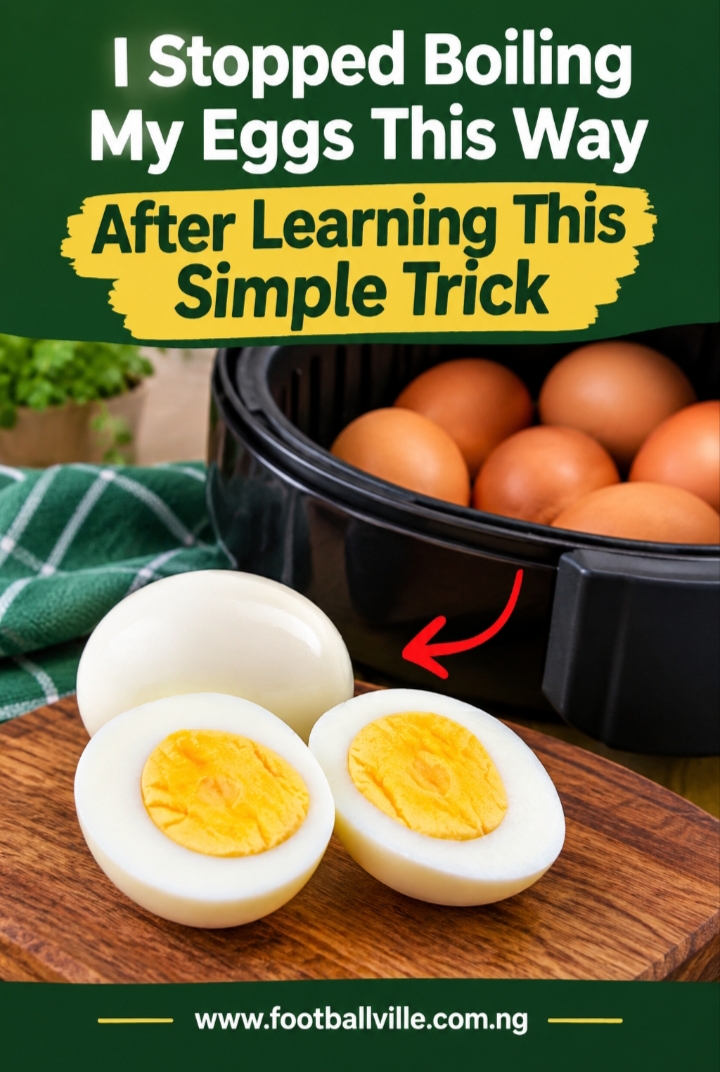

I was the person who always had a timer set, a slotted spoon in hand, and a pot of boiling water splashing on the stovetop every Sunday morning. For years, my meal-prep routine started with lower-than-gentle drops of cold eggs into boiling water, followed by a frantic dash to an ice bath, praying to the kitchen gods that the shells wouldn’t take half the egg white with them when peeled.
Then I learned the real science behind egg whites—and I haven’t boiled an egg in a pot of water since.
The Real Problem with Boiling
When you submerge eggs directly into boiling water, two things go wrong:
* The Thermal Shock Gamble: Dropping cold eggs into aggressive, turbulent boiling water causes cracks, leading to those unsightly, leaked white wisps everywhere.
* Rubber Textures: Boiling cooks the outer layer of the egg white too fast while waiting for the yolk to catch up. You end up with a rubbery exterior and a yolk that’s either undercooked or surrounded by that unappealing grayish-green ring (which is just sulfur and iron reacting from overexposure to high heat).
The Trick: Stop Boiling, Start Steaming
The secret that completely replaced my old method is steaming.
Instead of submerging eggs in a deep bath of boiling water, you cook them in a covered pot with just half an inch of water at the bottom.
Here is why it works so much better:
* Gentler, Uniform Heat: Steam operates at a consistent temperature and transfers heat more evenly than rolling water, meaning no violent bumping around and zero cracked shells.
* The Absolute Easiest Peel: Steam penetrates the porous eggshell much faster than water can. This rapidly shrinks the inner membrane away from the shell wall, making the shell slide off in huge, clean pieces every single time—even with farm-fresh eggs.
How to Make Perfect Steam-Cooked Eggs
* Add the Water: Pour about 1/2 inch of water into a pot or saucepan—just enough to cover the bottom.
* Bring to a Boil: Turn the heat to high until the water starts rapidly producing steam.
* Add Eggs & Cover: Gently place your cold eggs directly from the fridge into the pot in a single layer (a steamer basket is optional, but not necessary). Immediately put a tight-fitting lid on the pot.
* Set Your Timer:
* Runny/Jammy Yolks: 6 minutes
* Fudgy/Medium Yolks: 8 to 9 minutes
* Classic Hard-Cooked Yolks: 11 to 12 minutes
* The Quick Chill: Transfer the eggs immediately into a bowl filled with cold water and ice cubes for 3 to 5 minutes to halt the cooking process.
Once you tap the bottom of a steamed egg and watch the entire shell slip off effortlessly in one or two giant pieces, you’ll never fill a huge pot of water for ha. rd-boiled eggs again.
