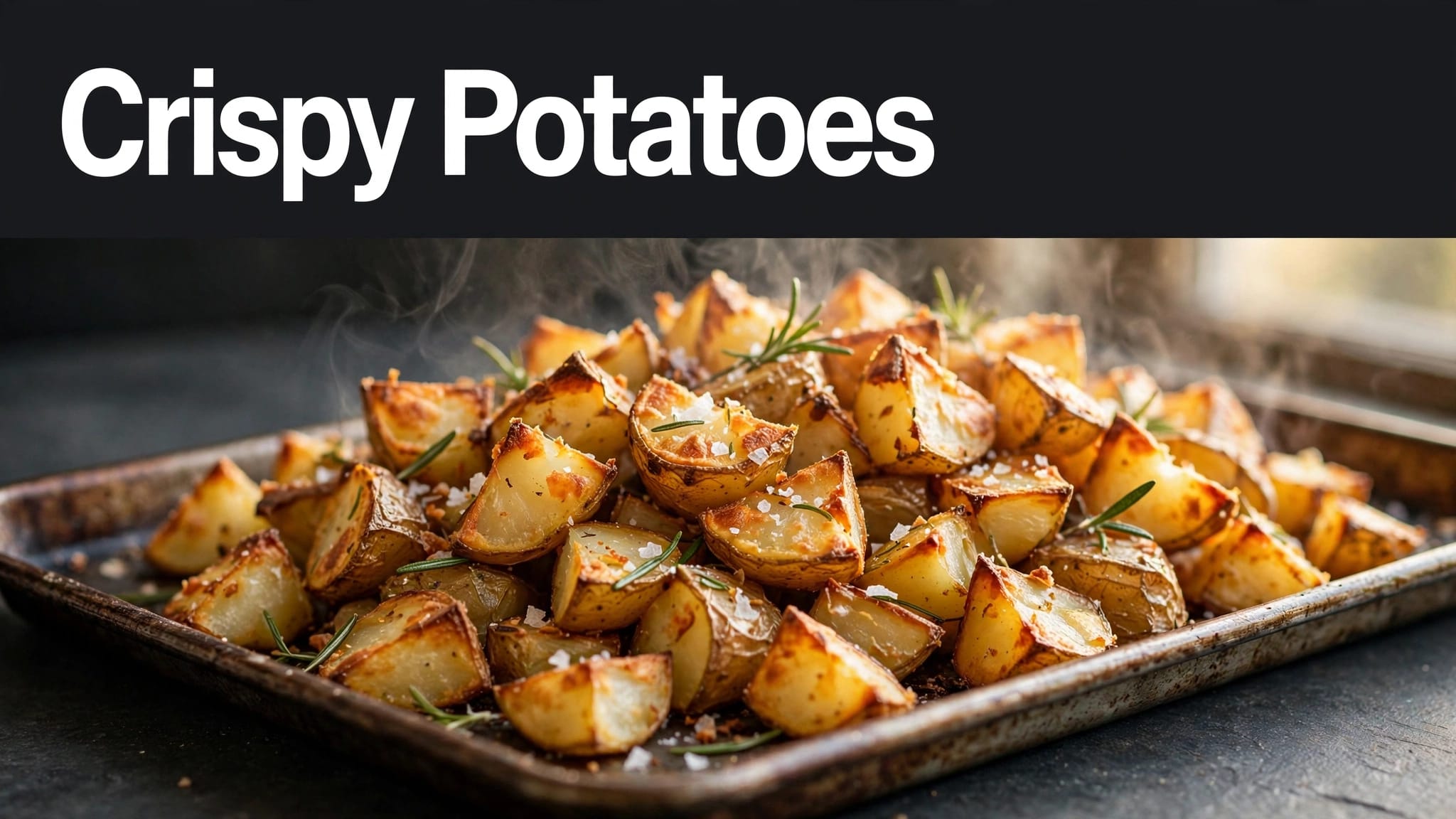

Golden edges, fluffy centers, and that satisfying crunch hit differently when the potatoes come straight from the oven. These crispy potatoes don’t need chef tricks or specialty ingredients.
A starchy potato, a little oil, and a few smart moves create the kind of tray everyone reaches for first. The secret is removing moisture, roughing up the edges, using a hot pan, and giving every piece room to brown.
Why These Crispy Potatoes Turn Golden So Easily
Crispness starts before the potatoes touch the oven. Dry surfaces brown faster, while moisture creates steam that softens the exterior. High heat gives the oil enough energy to turn those uneven edges dark gold and crunchy.
Russets are the best choice for a shattery crust because they are starchy and relatively low in moisture. Serious Eats’ roast potato guide also finds that Russets create the crispest crusts. Yukon Golds offer a richer flavor and a creamier middle, although their crust is slightly less dramatic.
Pick the Right Potato and Cut It Evenly
Choose 1 1/2 pounds of Russet potatoes for maximum crunch, or use Yukon Golds when you want a buttery interior. Yukon Gold potatoes have a balanced starch and moisture profile, which helps them stay creamy inside.
Cut every potato into 1 1/2 to 2-inch pieces. Similar-sized chunks cook at the same rate, so you won’t find one burnt corner beside a hard, undercooked piece.
The Four Details That Make the Biggest Difference
Parboil the chunks in well-salted water for 6 to 8 minutes, until the outsides are tender but the centers still hold firm. Then drain them and let the steam rise away for a few minutes.
Shake the potatoes gently in the pot or colander. Their softened surfaces will turn rough and fluffy, creating plenty of tiny edges to catch the oil.
Preheat a rimmed baking sheet with the oil already on it. A cold pan slows browning and gives potatoes time to stick. Finally, spread them in one layer with visible gaps between pieces.
Moisture is the enemy of browning. Dry potatoes and open space create the crisp crust.
How to Make Crispy Potatoes With One Simple Oven Method
Heat the oven to 425°F to 450°F. If you use convection, set it closer to 400°F to prevent the edges from getting too dark too soon.
For one generous tray, gather:
- 1 1/2 pounds Russet or Yukon Gold potatoes
- 3 tablespoons olive oil, duck fat, or another roasting fat
- Kosher salt and black pepper
- Optional garlic powder, rosemary, or thyme
Follow this simple flow:
- Scrub the potatoes and cut them into even 1 1/2 to 2-inch chunks. Add them to salted boiling water and parboil for 6 to 8 minutes.
- Drain thoroughly, then leave the potatoes in the colander for several minutes. Toss them gently until their outer edges look shaggy.
- Carefully remove the hot baking sheet from the oven. Season the potatoes with oil, salt, pepper, and a small pinch of garlic powder if you like.
- Spread the potatoes across the hot pan in a single layer. They should sizzle when they hit the oil.
- Roast without touching them for 20 to 25 minutes. Then turn the pieces with a thin spatula and roast until deeply golden, usually another 10 to 20 minutes.
Rainbow Plant Life’s high-heat potato method also uses a hot 450°F oven for a deeply browned finish. Timing changes with potato variety and chunk size, so judge the tray by color and texture rather than the clock.
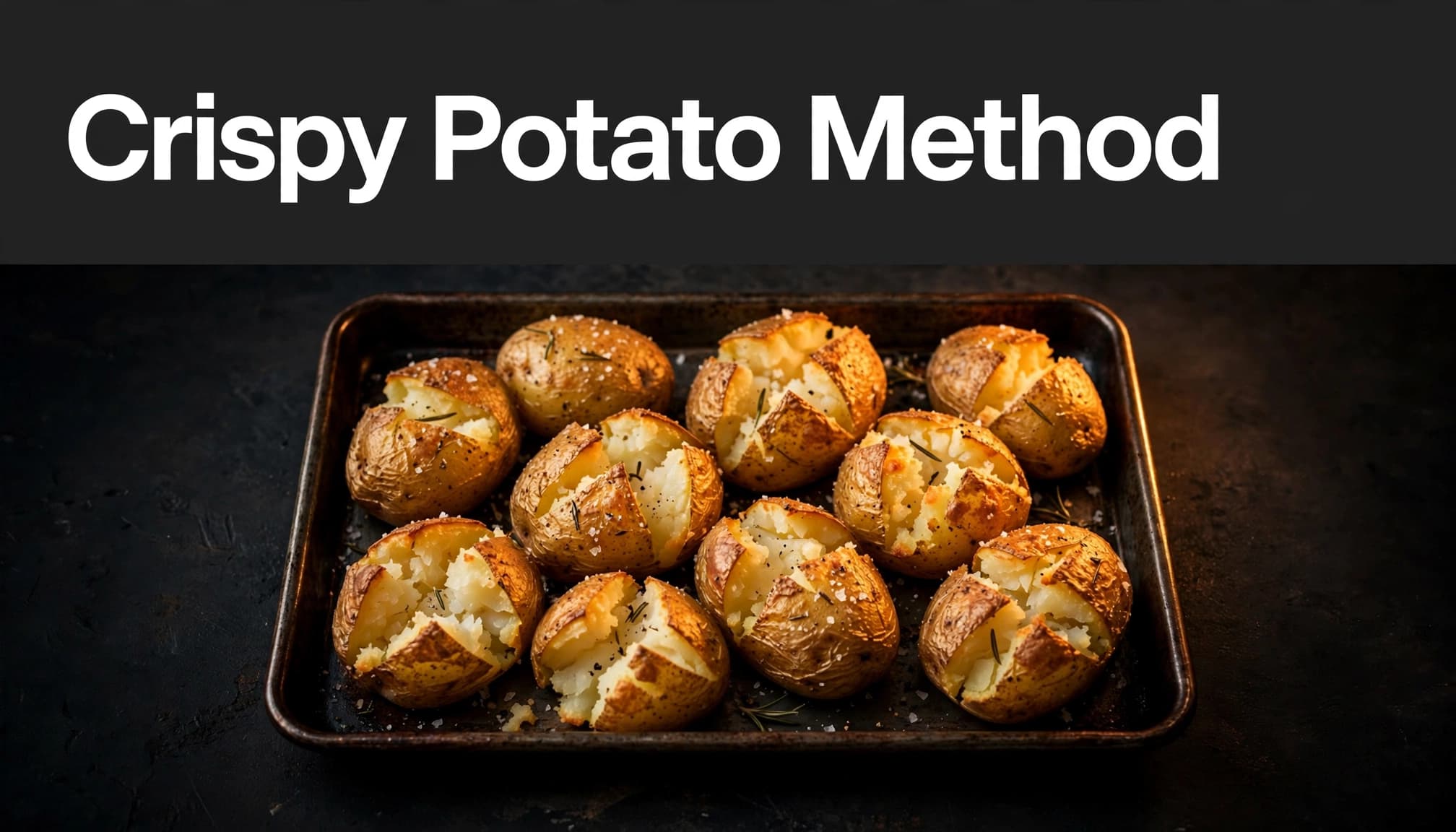
Serve immediately. The crust is at its loudest and crunchiest while the potatoes are still hot.
Should You Soak Potatoes Instead of Boiling Them?
A cold-water soak can remove surface starch without watching a pot. Soak cut potatoes for at least 30 minutes, or leave them overnight when dinner prep needs to wait.
After soaking, rinse the pieces and dry them extremely well with a clean towel. Any water left behind will fight browning in the oven.
Parboiling is the better choice for fluffy centers and those craggy, oil-catching edges. Soaking works when you want a more hands-off option. You can also add 1/4 teaspoon baking soda to every 4 cups of boiling water, but it is optional.
Easy Ways to Change the Flavor Without Losing the Crunch
Olive oil makes an easy everyday tray. For a richer roast-potato flavor, use duck fat, goose fat, bacon fat, or melted butter. Keep the amount moderate so the potatoes roast rather than fry in a deep puddle.
Finish With Delicate Seasonings
Garlic powder, smoked paprika, rosemary, thyme, and grated Parmesan taste best after roasting. Fresh herbs and cheese can burn on a hot pan, so toss them through the finished potatoes instead.
A pinch of flaky salt and fresh herbs adds contrast without covering the crisp crust.
The Mistakes That Leave Potatoes Soft Instead of Crisp
- Wet potatoes steam on the pan, so drain and dry them before adding oil.
- An overcrowded sheet traps moisture. Use two pans if the pieces are touching.
- A cold pan delays browning, so preheat it with the fat.
- Low heat leaves the potatoes pale and soft. Roast at 425°F or higher.
- Oversized, uneven chunks cook inconsistently. Keep each piece close to the same size.
- Too much stirring tears fragile edges before they set. Let the first side brown undisturbed.
- Potatoes soften as they sit, so bring them to the table soon after roasting.
Serve them with eggs, roast chicken, burgers, or a creamy dipping sauce that catches in the rough golden crevices.
Key Takeaways
The reliable path to crispy potatoes is simple: choose starchy potatoes, remove excess moisture, create rough edges, and roast on a hot, uncrowded sheet pan.
Russets bring the biggest crunch. Yukon Golds bring a creamy center. Both become excellent when the pan stays hot and the potatoes have space.
Bring Them to the Table Hot
Great roasted potatoes come down to a few repeatable habits. Parboil or soak, dry the pieces thoroughly, rough up the edges, and let high heat do its work.
The recipe stays flexible with pantry seasonings and whatever fat suits dinner. Bring the tray to the table while the edges are still crackling.
