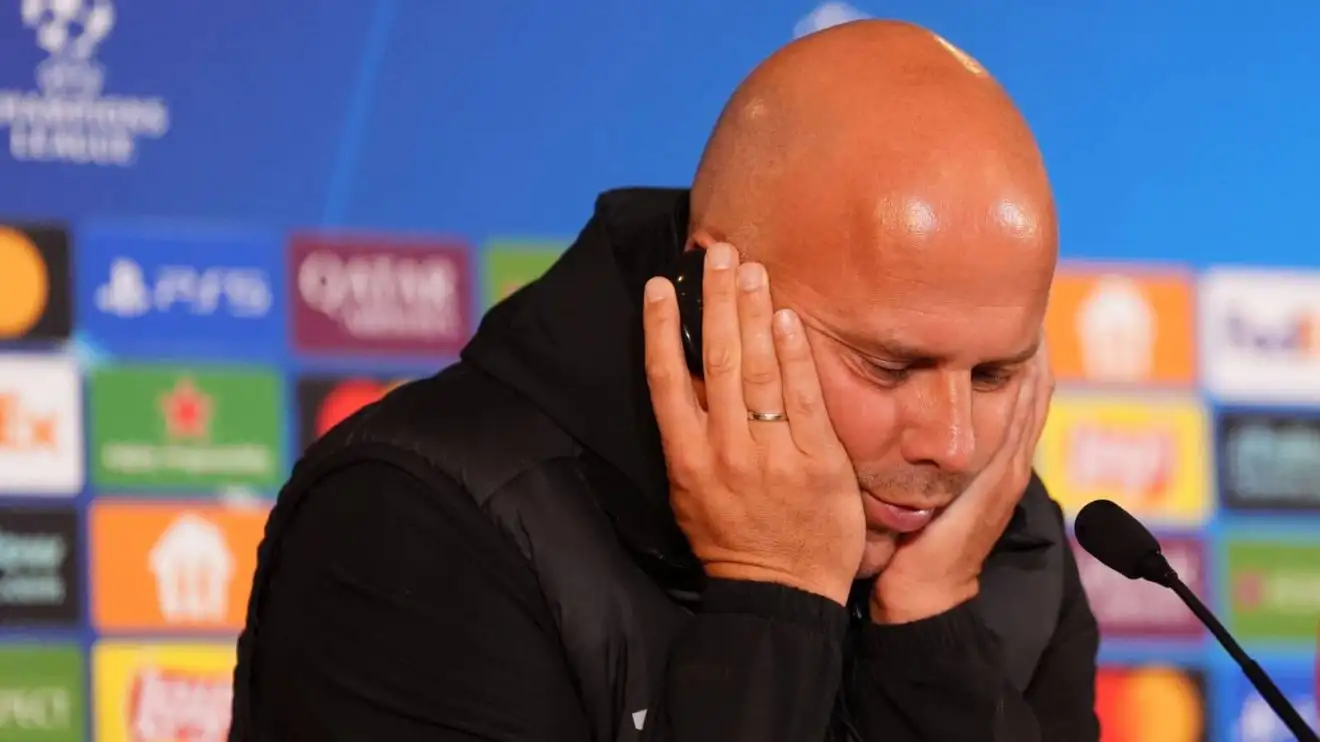
“I’m not here to talk about the referee or VAR; we weren’t good enough, and we need to look in the mirror before we look at the officials.” Virgil van Dijk has reportedly SHOCKED the Liverpool dressing room by openly disagreeing with Arne Slot’s post-match ‘fume’ following the 2-1 loss to Man City.
The Captain’s Truth: Van Dijk’s Stark Mirror Check Cuts Through Slot’s “Fume”

In the emotional crater left by a last-gasp, title-race defeat to Manchester City—a loss that saw manager Arne Slot erupt in a blistering, post-match condemnation of officiating—a different, more sobering voice has emerged from the Liverpool dressing room. It is the voice of the captain, Virgil van Dijk, and his message was one of stark, uncomfortable accountability that reportedly left his teammates in stunned silence.
While Slot’s raw “fume” at the match officials dominated the headlines and likely echoed the initial, fiery sentiment in the tunnel, van Dijk deliberately steered the conversation inward. **“I’m not here to talk about the referee or VAR,”** the Dutch defender is reported to have stated with authoritative calm, directly countering the external narrative. **“We weren’t good enough, and we need to look in the mirror before we look at the officials.”**
This was not a mutiny, but a **masterclass in leadership**. In a moment ripe for deflection and collective grievance, van Dijk performed a surgical intervention on the squad’s mentality. He acknowledged the frustration—the cruel timing, the disputed moments—but refused to let them become a crutch or an excuse. His message reframed the defeat: it was not something *done to* Liverpool, but something they *allowed*.
**The Shock of Self-Reflection**
The reported “shock” in the dressing room speaks volumes. In the immediate aftermath of such a heartbreak, players are conditioned to rally behind their manager’s public defense. Van Dijk’s intervention demanded a more difficult, more mature response. He forced a mirror in front of a group that had just seen its “cheat code” plan fail and its “secret weapon” subdued. Were they truly, collectively, “good enough”? His implication was clear: no.
**The Slot-Van Dijk Dynamic: Tension or Synergy?**
This incident reveals the fascinating, nascent dynamic between the new tactical architect, Arne Slot, and the team’s longstanding emotional pillar, van Dijk. Slot’s job is to fight their corner externally, to absorb the media flak and channel the fury. Van Dijk’s duty, as captain, is to manage the internal standards, to ensure that fury is converted into focus, not excuse-making.
It is not a disagreement in objective, but in methodology—a vital, healthy tension that separates a reactive team from a resilient one. Slot provides the protective shell; van Dijk ensures the core remains hardened by truth.
**The Road Ahead: Fury vs. Foundation**
Van Dijk’s “look in the mirror” mandate is the crucial first step in ensuring this defeat becomes a foundation, not a fracture. It prevents a corrosive culture of blame from taking root and instead installs a platform of brutal self-honesty. The message to the squad is that their title hopes were not ended by a single decision, but by the accumulation of moments they themselves did not control.
By publicly shouldering the burden of responsibility, Virgil van Dijk did not undermine his manager; he complemented him. Slot fought the battle with the outside world. Van Dijk, in that quiet, shocked dressing room, began the more important war within. The defeat belongs to City. The response, thanks to the captain, will belong entirely to Liverpool.
