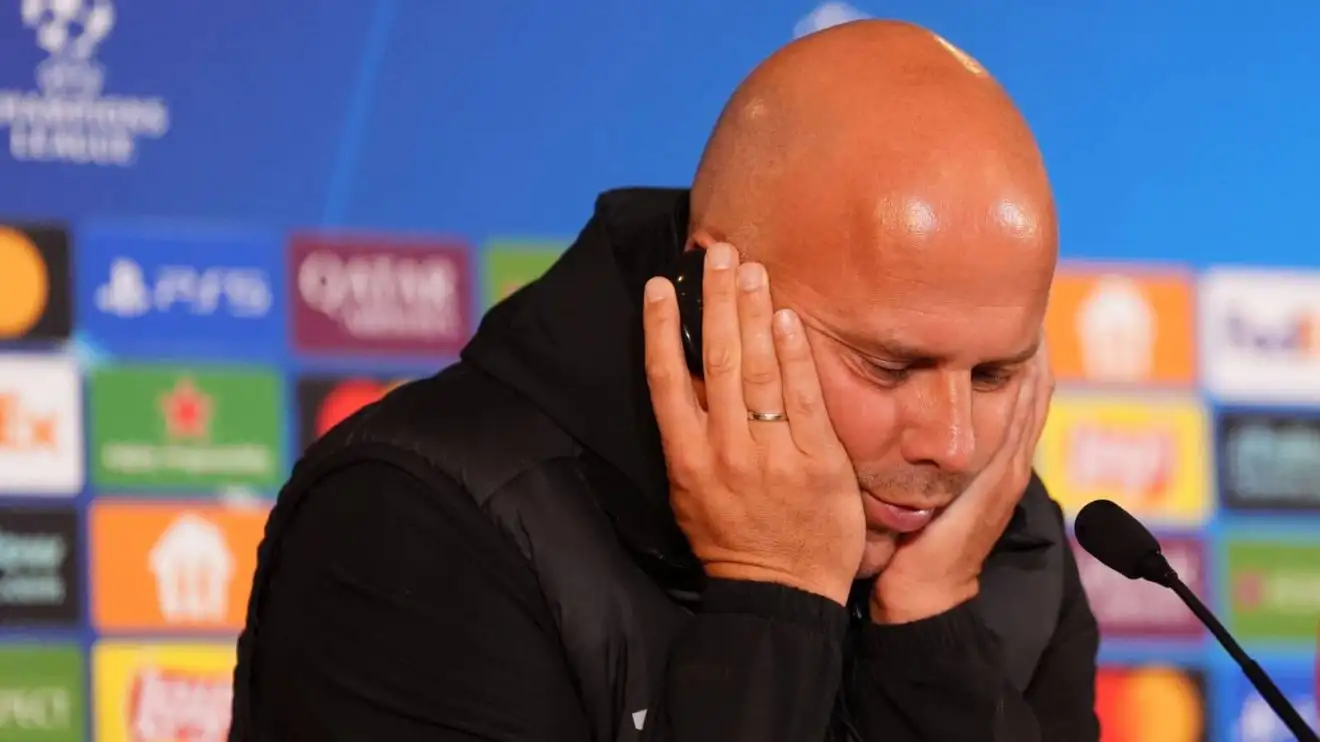
“I’m a player who wants to play. I’ve played through injuries and when I wasn’t 100% fit, so being left out is hard to take. We have to wait and see what happens in the next few weeks”, A key Liverpool player drops a bombshell on his future as he prepares for a potential move to a Premier League rival
The Anfield Anomaly: A Pillar of the Klopp Era Contemplates an Unthinkable Exit as Uncertainty Breeds Discontent

The Anfield Anomaly: A Pillar of the Klopp Era Contemplates an Unthinkable Exit as Uncertainty Breeds Discontent
In the meticulously calibrated ecosystem of a top football club, where squad harmony is as vital as tactical brilliance, the public expression of player dissatisfaction is a tremor that can foreshadow a seismic shift. At Liverpool, a club recently transitioned from the cathartic, all-consuming era of Jürgen Klopp into the meticulous new dawn of Arne Slot, such a tremor has now been felt. A figure once considered a non-negotiable pillar of the team’s identity has broken rank, not with a transfer request, but with a candid, wounded admission that lays bare a profound personal and professional crossroads.
**”I’m a player who wants to play. I’ve played through injuries and when I wasn’t 100% fit, so being left out is hard to take,”** stated the player, his words carrying the weight of a warrior feeling his battlefield contributions are being overlooked. The conclusion was a carefully phrased yet unmistakable ultimatum: **”We have to wait and see what happens in the next few weeks.”**
This is not the outburst of a peripheral figure. This is the quiet, pained frustration of a **key Liverpool player**—a individual whose sacrifice and service were woven into the fabric of the club’s most triumphant modern moments. His declaration is a multi-layered bombshell: it is a critique of his current standing, a testament to his own perceived value, and a stark warning that his future may lie away from Anfield, with a move to a **Premier League rival** now a tangible possibility.
The Psychology of the Warrior: “Played Through Injuries”
The player’s invocation of his past sacrifices—**”I’ve played through injuries”**—is the most telling part of his statement. This is the language of the consummate professional, the “old-school” mentality that managers like Klopp revered. It speaks to a currency of loyalty and pain paid into the club’s account, a down payment on future trust and selection. To have rendered such service, only to now find himself on the outside looking in, creates a cognitive dissonance that breeds deep resentment. He is arguing that his commitment, proven in the most physical terms, has earned him a right that is now being denied.
This sentiment cuts to the heart of a post-Klopp transition. Where Klopp’s man-management was often visceral and loyalty-based, Slot’s approach is inherently more clinical, analytical, and forward-looking. A new manager has no emotional debt to the past; his only currency is current performance and future fit. For a player who defined himself through his battle scars for the previous regime, this new, dispassionate calculus can feel like a betrayal of an unwritten contract.
“Being Left Out is Hard to Take”: The Erosion of Identity
For elite athletes, selection is not just about participation; it is identity, validation, and purpose. To be a **”key player”** is to be central to a club’s concept of itself. Being left out, therefore, is an existential threat. The player’s statement reveals a man for whom this demotion—whether temporary or tactical—is not just a professional setback, but a personal affront. It challenges his self-image as an indispensable protagonist.
This is particularly potent in the context of Liverpool’s evolving midfield. The era of the specific, hyper-specialized “Klopp midfielder”—defined by relentless endurance and tactical discipline—is being reassessed. Slot’s system may demand different technical or spatial profiles. A player who was once the engine may now be viewed as a square peg, his very virtues now potential limitations. This fundamental shift can leave even the most decorated veterans feeling suddenly obsolete.
The Ultimatum and the Rival: “Wait and See”
The closing remark—**”We have to wait and see what happens in the next few weeks”**—is the loaded gun on the table. It is a public deadline, placing the onus on the manager and the club to reinstate him as a central figure. The “we” is pointed; it is no longer just his future, but a shared responsibility. The “next few weeks” frames the upcoming pre-season and early fixtures as a probationary period, not for him, but for the club to prove its commitment to him.
The report that he is **”preparing for a potential move to a Premier League rival”** escalates the stakes dramatically. This isn’t a threat of a move to Saudi Arabia or a European side; it is the specter of direct, domestic reinforcement of a competitor. It is the ultimate leverage play, demonstrating a willingness to transform personal grievance into a tangible sporting threat against Liverpool itself.
Conclusion: A Litmus Test for the Slot Era
This bombshell is the first major test of Arne Slot’s managerial mettle and the club’s strategic direction in the post-Klopp landscape. It poses uncomfortable questions: How do you manage the legacy and pride of a declining titan? Can you transition a squad with respect without being held hostage by sentiment?
The player, by baring his soul, has forced the issue. He has stated that mere squad rotation is unacceptable to a warrior of his pedigree. Liverpool must now decide if this warrior remains central to their next battle, or if his glorious past has indeed become an impediment to their future. The coming weeks will determine whether this is a rift healed or the beginning of an unthinkable, and deeply symbolic, departure to enemy lines. The silence at Kirkby will now be deafening, as the club weighs the cost of lost loyalty against the promise of a new vision.
