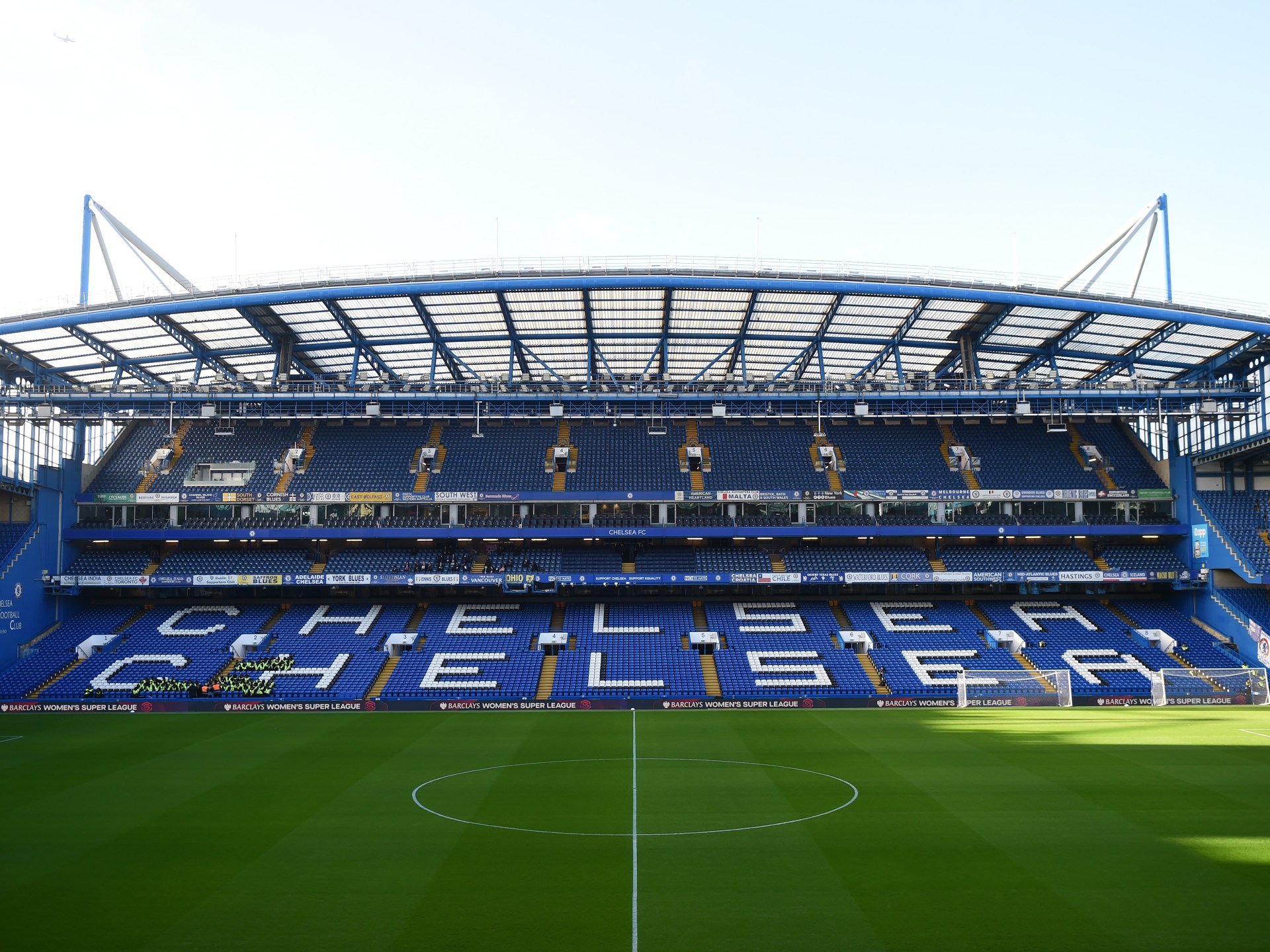
Chelsea’s owners BlueCo are set to shock the football world by proving their multi-club model is the most powerful in Europe!
The BlueCo Gambit: How Chelsea's Owners Are Poised to Redefine European Football's Power Structure

The BlueCo Gambit: How Chelsea’s Owners Are Poised to Redefine European Football’s Power Structure
In the often-insular world of European football, where tradition frequently clashes with ambition, a seismic shift is underway—one orchestrated not from the dugouts of iconic stadiums, but from the boardrooms of a bold new ownership group. Chelsea’s custodians, BlueCo, are on the precipice of a strategic masterstroke that promises to send shockwaves through the continental establishment. Their audacious mission: to prove, beyond any reasonable doubt, that their evolving multi-club model is not merely a supplementary project, but the most potent and sophisticated footballing ecosystem in Europe.
This is more than just a tale of financial muscle; it is a narrative of architectural brilliance, long-term vision, and a fundamental re-imagining of how a modern football empire can be built, sustained, and ultimately, dominate.
Deconstructing the Multi-Club Metagame
The concept of a multi-club network is not novel. The City Football Group (CFG), with Manchester City as its crown jewel, pioneered the model, demonstrating the value of shared scouting, coaching philosophies, and commercial synergies. Red Bull’s interconnected clubs have similarly shown the power of a unified sporting identity. However, BlueCo’s approach, spearheaded by Clearlake Capital and Todd Boehly, appears to be an evolution of this concept—one designed with a specific, aggressive intent to achieve competitive supremacy at the very highest level, starting with Chelsea FC.
The traditional multi-club model has often been viewed as a talent pipeline or a commercial expansion tool. BlueCo’s vision seems more holistic and immediately performance-oriented. Their strategy is a multi-faceted engine designed to generate a perpetual competitive advantage for Chelsea, while simultaneously building value across the entire network.
The Pillars of the BlueCo Blueprint
1. The Hyper-Efficient Talent Engine: At its core, the model is a revolutionary talent lifecycle manager. Clubs like RC Strasbourg in France’s Ligue 1 and the potential for further strategic acquisitions are not just feeder clubs; they are elite finishing schools and proving grounds. The aim is to create a closed-loop system:
· Global Scouting & Acquisition: Identifying prodigious talent worldwide at the earliest possible stage.
· Strategic Placement & Development: Placing these talents in the most competitive environment for their specific development stage—be it in South America, Europe’s top-five leagues, or elsewhere—with a unified playing philosophy that mirrors Chelsea’s intended style.
· Seamless Integration & Profit: Providing a clear, tested pathway to Stamford Bridge for the absolute elite, while moving other high-potential players within the network to maximize their value and playing time. This creates a constant stream of both first-team-ready stars and significant transfer revenue to fuel further investment, all while circumventing the inflated prices of the open market.
2. Tactical Laboratories & Managerial Incubation: Each club within the BlueCo orbit can serve as a live laboratory. New tactical systems, data-driven innovations, and emerging coaching talents can be trialed and refined in competitive settings. Imagine a promising young coach, steeped in the “BlueCo philosophy,” cutting his teeth at Strasbourg, perfecting a high-press system, and then being ready to step into the Chelsea hot seat or another top club with a proven track record. This mitigates the colossal risk and cost of managerial turnover at the elite level.
3. Financial Agility & Regulatory Navigation: In an era of stringent Financial Fair Play (FFP) and Sustainability regulations, a multi-club network offers unparalleled flexibility. Player asset value can be grown and realized within the group, creating accounting fair value that strengthens Chelsea’s balance sheet. It allows for strategic player circulation to meet squad registration rules and optimize wage structures. In essence, it builds a financial fortress where Chelsea is no longer a single entity fighting regulations, but the central hub of a compliant, synergistic empire.
4. Commercial & Brand Synergy: The collective commercial power of multiple clubs across major European markets creates a leverage point no single club can match. Sponsorship deals, merchandising, and media rights can be packaged, offering partners access to a global football audience through a single agreement. This generates unprecedented revenue streams to reinvest in infrastructure, talent, and technology.
The “Shock” Factor: Why This Could Be Different
The football world will be “shocked” not because BlueCo is attempting this, but because of the sheer scale, speed, and ruthless efficiency with which they seem poised to execute it. While others built their networks over a decade, BlueCo’s deployment of capital and strategic acquisitions suggests an accelerated timeline. Their focus appears laser-sharp on immediate sporting ROI for Chelsea, making every other club in the network a direct contributor to success at Stamford Bridge.
Furthermore, their model seems designed to solve football’s ultimate paradox: the need for both instant success and sustainable longevity. Chelsea can simultaneously compete for the Premier League and Champions League today, while securing the stars and the system to dominate tomorrow.
The Future: A New European Order
If successful, the implications are profound. The transfer market could be fundamentally altered, with elite talent flows increasingly internalized within these super-networks. Competitive balance in domestic leagues could be challenged, not just by wealthy owners, but by systemic architectural advantages. The very definition of a “football club” may evolve from a singular, historic institution to a dynamic node within a global footballing organism.
Of course, challenges remain—sporting success is never guaranteed, maintaining a cohesive culture across clubs is complex, and regulatory bodies will scrutinize every move. The human element of fan identity and club tradition must also be respectfully managed.
Yet, the statement is clear: BlueCo is not just playing the game; they are attempting to rewrite its rules. By weaving Chelsea into the center of a vast, intelligent, and self-reinforcing footballing web, they are betting that the future of European football supremacy lies not in the strength of a single giant, but in the power of an entire, perfectly calibrated ecosystem. The shock to the football world won’t be that they tried, but if—or more likely, when—they succeed.
