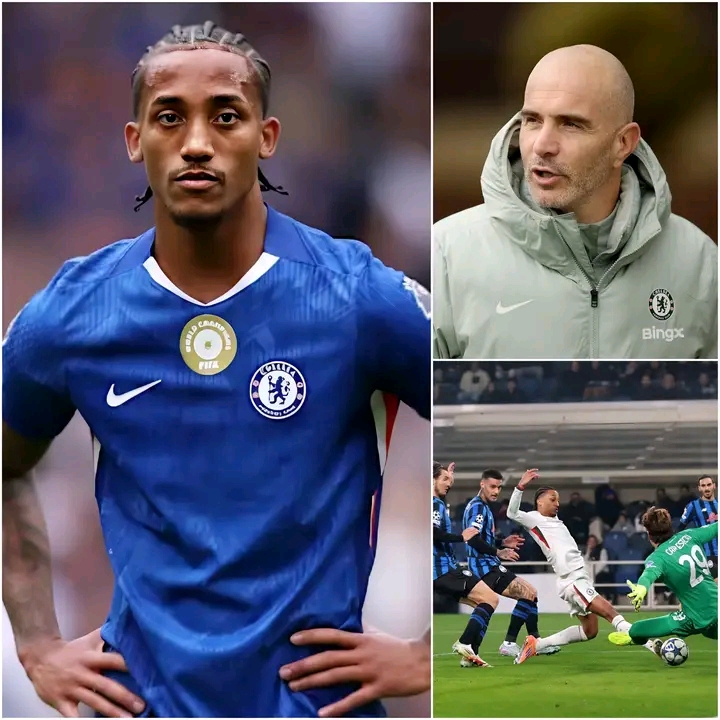
“I DIDN’T LOSE BECAUSE OF MY FOOTBALL SKILLS, I LOST BECAUSE I AM BLACK!” João Pedro shouted in the middle of the post-match press conference, slamming the microphone onto the table and leaving the entire room in stunned silence! A few minutes later, he directly responded to the criticism aimed at him: “IF YOU DON’T LIKE THIS, IT MEANS YOU ARE RACIST.” But what truly left everyone speechless was Enzo Maresca’s reaction: just one single word… a word that instantly silenced the entire press room.

The football world was thrown into chaos last night after a dramatic and unexpected scene unfolded during the post-match press conference. João Pedro, visibly emotional after his team’s heartbreaking defeat, erupted into a passionate outburst that instantly captured global attention.
His words, powerful and shocking, left journalists speechless and fans divided as social media lit up with intense debate and speculation. What seemed like a routine press briefing quickly escalated into one of the most talked-about moments of the season.
João Pedro’s frustration had been mounting since the final whistle, and when a reporter asked a pointed question regarding his missed chances, the tension snapped. Slamming the microphone onto the table, he shouted, “I didn’t lose because of my football skills, I lost because I am Black!” The room froze.
Cameras stopped moving. Even seasoned journalists were stunned by the rawness of his statement. No one had expected such an emotional claim, and the atmosphere turned electric within seconds.
As security and staff tried to restore order, João Pedro’s words continued to echo across the room. Reporters exchanged glances, unsure whether they had heard correctly.
Then, just as the murmurs began to rise, he turned back toward the panel and added another explosive declaration: “If you don’t like this, it means you are racist.” The accusation only deepened the shock.
It was an unprecedented scene—one that challenged the norms of post-match dialogue and touched upon issues much bigger than football.
Outside the press room, reactions spread like wildfire. Some fans immediately expressed sympathy for João Pedro, believing his comments reflected genuine emotional pain. Others accused him of deflecting responsibility and stirring unnecessary controversy.
Within minutes, every major platform was buzzing: clips of his outburst were shared millions of times, hashtags trended worldwide, and pundits began dissecting every second of the emotional moment. The energy was so intense that even neutral observers found themselves drawn into the debate.
However, the most unexpected twist came when the attention shifted to head coach Enzo Maresca, who had been sitting silently beside João Pedro throughout the storm.
While the journalists expected him to deliver a lengthy explanation or a diplomatic statement, he remained composed, showing no visible sign of frustration or surprise.
When the room finally settled enough for him to speak, he leaned into the microphone and delivered a single word that instantly changed the entire narrative.
That word was “Context.” It struck the room like a second shockwave. Reporters stared at him, waiting for clarification, but none came. Maresca simply folded his hands, as though he had said everything that needed to be said.
The brief, deliberate statement opened the door to speculation and sent analysts scrambling to interpret its meaning. What did he imply? What was the real context? And what, exactly, had been happening behind the scenes before João Pedro’s dramatic outburst?
In the hours that followed, more details began to surface, revealing a deeper story that few had anticipated. According to insiders close to the team, João Pedro had been dealing with persistent online abuse in recent weeks, much of it racially charged.
Messages, comments, and targeted attacks had reportedly become overwhelming, affecting his confidence and emotional stability. Team staff had attempted to shield him from the worst of it, but the negative energy had clearly taken a toll.
Sources also revealed that some criticism after the previous match had crossed a line, with a few accounts directing hateful remarks specifically at João Pedro’s identity rather than his performance. This context, as Maresca emphasized with his single word, painted a different picture of the incident.
It wasn’t merely about missed opportunities or tactical decisions—João Pedro was reacting to a buildup of targeted hostility that extended far beyond the pitch.
Maresca’s refusal to elaborate further was deliberate. Those close to him explained that he wanted the public to pause and consider the complexity of the situation before jumping to conclusions. Instead of escalating the tensions or engaging in blame, his one-word response encouraged listeners to look deeper.
He later spoke privately with team media staff, emphasizing that the emotional health of players must be treated as seriously as their physical condition.
As the new details emerged, fan reactions began to shift. Many supporters expressed regret for having judged João Pedro so quickly, acknowledging that nobody truly understands the emotional weight players carry behind the scenes.
Others argued that, while his message may have been fueled by pain, the delivery still contributed to the controversy. The online debate took on a new layer—one centered not only on the match but on mental health, racism, and the growing pressure placed upon athletes in the public eye.
Meanwhile, João Pedro remained silent throughout the night, refusing interviews and declining to post on any platform. Those who know him well described him as reflective, not reckless—a young athlete who reached an emotional breaking point under extraordinary pressure.
Teammates reportedly stood by him behind closed doors, offering support and urging him to take time away from the public spotlight.
As dawn approached, a fuller picture of the evening’s drama began to solidify. Far from being a simple emotional outburst, João Pedro’s statements reflected a buildup of psychological strain and personal hurt that few had recognized until the moment it spilled out on the world stage.
Maresca’s cryptic but powerful “Context” was not a dismissal, but an invitation to understand the broader truth—a truth that revealed the hidden wounds beneath the glamour of elite football.
What happens next remains uncertain. The club is expected to release a formal statement addressing the incident, highlighting both the seriousness of online abuse and the importance of emotional wellbeing.
Analysts predict that the event may spark a deeper conversation across the league about player safety, mental health protocols, and the responsibility of fans and media in shaping an athlete’s environment.
One thing is already certain: this press-room confrontation will be remembered for years. João Pedro’s emotional cry, combined with Maresca’s enigmatic and revealing one-word response, has opened a conversation far bigger than the match that preceded it.
It exposed hidden battles, forced uncomfortable discussions, and revealed truths that rarely reach the surface. In doing so, it may become a turning point—not only for João Pedro, but for football culture as a whole.
