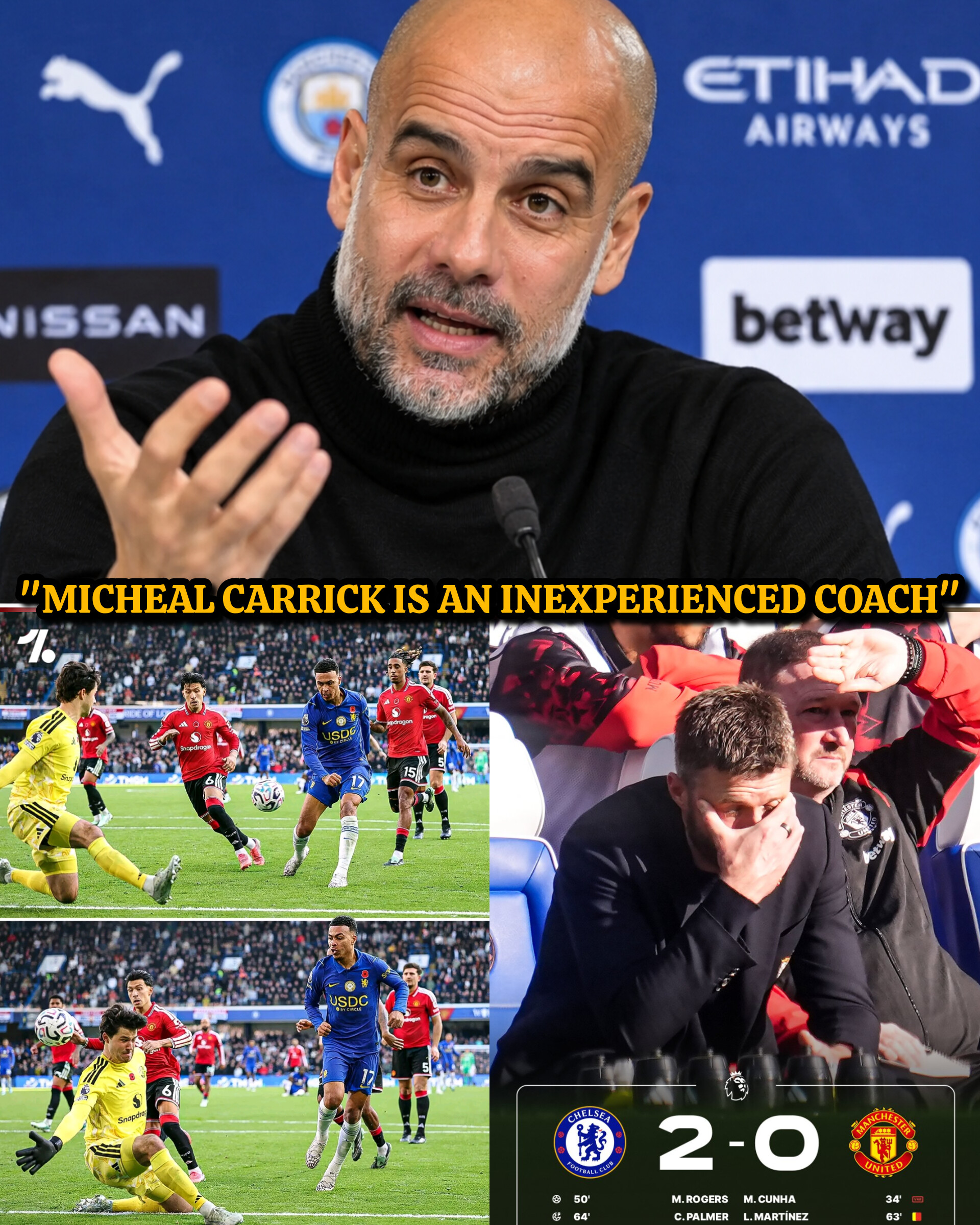
Pep Didn’t Hold Back: Why Guardiola Called Out United’s Strategy After the Big Match

Anatomy of a Meltdown: Inside Pep’s Extraordinary Old Trafford Interrogation
The floodlights at Old Trafford hummed in the damp Manchester air, casting long shadows across a media room that has seen its fair share of historic outbursts. Yet, few nights have delivered a post-match address quite like this.
Manchester City manager Pep Guardiola, usually quick to deflect or wrap his critiques in layers of diplomatic football jargon, completely abandoned the script. Fresh off watching a high-stakes tactical chess match unravel across town, the Catalan coach did not just analyze a rival’s performance—he dissected it with the cold, clinical detachment of a surgeon holding a scalpel, leaving nothing to the imagination.
The Flashpoint: A Selection That Baffled the Elite
At the heart of Guardiola’s fiery assessment was a bewilderment shared by analysts and supporters alike: Manchester United’s tactical setup against a fluid, high-octane Chelsea side. Rather than leaning into structural pragmatism or matching the visitors’ physical dynamism in the middle of the park, the team selection raised eyebrows long before the first whistle.
For Guardiola, who spends micro-seconds obsessing over spatial control and transitional triggers, the error was glaring.
> “Michael Carrick is not a coach with experience like me,” Guardiola stated bluntly, setting an uncompromising tone that immediately quieted the press room. “How can you look at a squad like Chelsea with all their quality and still start this player in that exact position when you have far better options sitting right there on the bench to counter their attack? That is such a novice move for a manager of a massive club like Manchester United.”
>
The critique cut straight to the core of modern management: accountability at the elite level. To Guardiola, elite football leaves zero margin for sentimental selections or tactical guesswork, particularly when facing opponents engineered to exploit structural imbalances in transition.
The Anatomy of the Mismatch
To understand Pep’s fury, one has to look at how the tactical battleground evolved over ninety minutes. Chelsea’s structural setup relies heavily on vertical bursts, pinning opposition defensive midfielders and isolating center-backs.
* The Midfield Vacuum: By deploying a personnel configuration lacking specialized defensive shielding, United inadvertently handed Chelsea’s runners free corridors of space between the lines.
* Untapped Depth: Guardiola’s primary frustration—highlighted by his incredulous reference to the substitutes’ bench—pointed to the wealth of specialized profiles United possessed in reserve, players whose physical traits and tactical habits were custom-made to absorb and neutralize Chelsea’s specific brand of threat.
* The Cost of Naivety: At the highest tier of the Premier League, structural miscalculations are punished instantaneously. The failure to shut down central passing lanes early allowed Chelsea to dictate the rhythm, turning what should have been a balanced tactical duel into an exhibition of transitional dominance.
Ripple Effects Across the City
While Guardiola’s remarks were ostensibly a post-match breakdown of an opponent’s structural flaws, they carry deeper psychological ramifications for the wider title race. It is rare for a manager to publicly audit a rival colleague’s internal squad management with such raw candor.
For Manchester United, the fallout threatens to amplify an already volatile atmosphere. When a benchmark-setting rival like Guardiola publicly exposes structural naivety, it turns up the heat on a club searching for an elusive identity.
As the dust settles on another dramatic chapter in the Premier League season, one thing is certain: the margin for error at the top has shrunk to zero, and the masters of the game are watching every single move.
