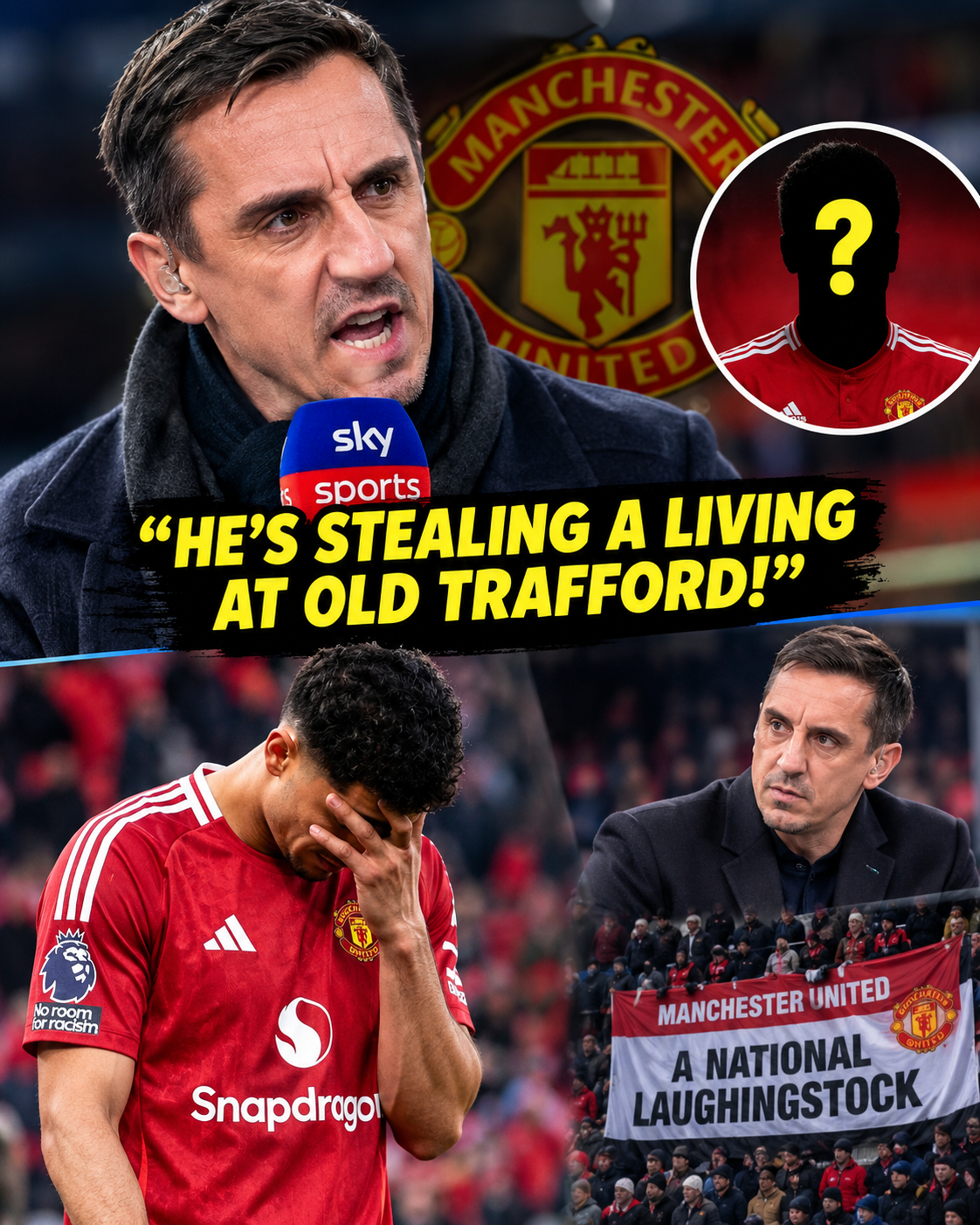
“Enough is Enough”: Gary Neville’s Brutal Rant Sums Up Every United Fan’s Frustration

Boiling Point at Old Trafford: Inside the Anatomy of a Club on the Edge
The rain in Manchester has always had a way of feeling heavier than it is anywhere else, but the storm currently brewing inside the walls of Old Trafford is entirely man-made.
For a club built on the bedrock of relentless grit, hard-earned triumphs, and an unwritten contract between the pitch and the stands, the mood has curdled into something far more toxic. Fans are tired, the table doesn’t lie, and behind closed doors, the pressure cooker is finally letting off steam.
Enter Gary Neville. Known for balancing his sharp punditry with a deep, visceral allegiance to the red half of Manchester, the former club captain has never been one to sugarcoat a crisis. But even by his standards, the atmosphere around his latest unfiltered reflections captures a tipping point—a moment where years of institutional patience have officially dissolved into sheer, unadulterated fury.
The Breaking Point
When a club drifts from competing for the game’s ultimate prizes to fighting for an identity, the collateral damage usually lands on the manager or the boardroom. Yet, the frustration underlying Neville’s recent remarks points directly to a rot on the grass.
While the quote making the rounds online—referencing a squad member “stealing a living” and treating the famous red shirt with “zero respect”—reads like the ultimate fan-forum fever dream, it mirrors the exact temperature of a fanbase at war with its own roster. It speaks to a recurring nightmare at Old Trafford: high earners coasting on reputation, immune to the consequences of another listless Sunday afternoon, while thousands of supporters scrape together hard-earned money to travel across the continent just to watch flat-footed apathy.
Whether or not those exact words were shouted down a microphone or muttered in a closed production suite, they weaponize a sentiment that every matchgoing Red feels in their bones. The patience is gone. The era of grading performances on a curve of “potential” and “transition” has hit a brick wall.
A Culture in Question
The wider context at Carrington and Old Trafford points to a fractured ecosystem. From explosive dressing room clear-the-air moments and leaked frustrations to the heavy burden resting on Michael Carrick’s shoulders to steady a listing ship, the club is crawling through yet another season of soul-searching.
When a squad possesses talent on paper yet routinely fails to match the physical and emotional standards of the shirt, the questions shift from tactical setups to simple character. Who bleeds for the badge? Who is hiding when the lights get bright? And, most importantly, how long can the hierarchy protect players who treat a privilege like a paycheck?
Neville’s underlying message—whether delivered via television analysis or the imagined roar of the Stretford End—is a stark ultimatum: until the deadweight is cut loose and accountability becomes non-negotiable, the club will remain trapped in its own cyclical comedy of errors.
Old Trafford doesn’t demand perfection; it demands effort. Until the players on the pitch understand that distinction, the boiling point will only keep rising.
