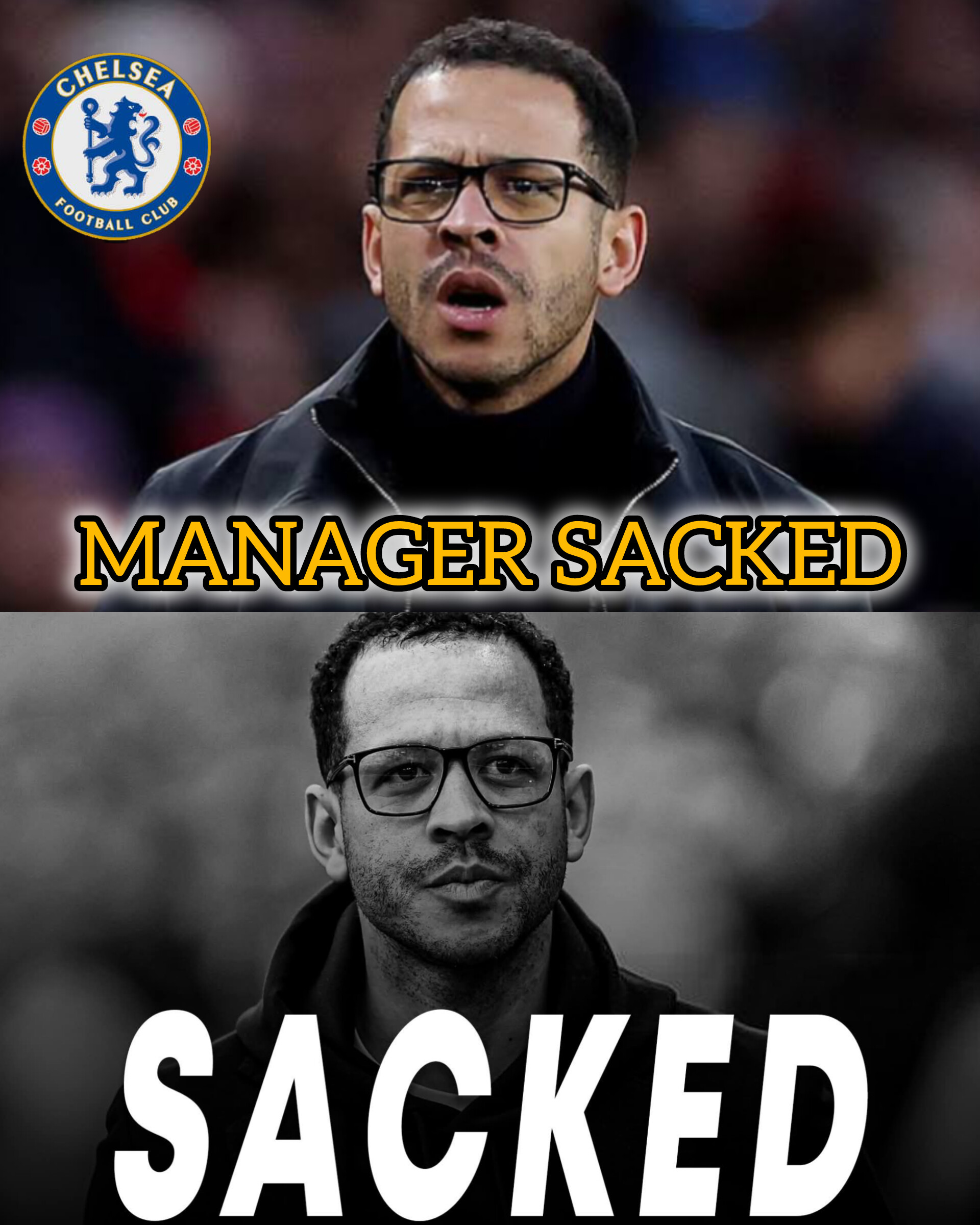
“THE AXE HAS FALLEN!” — Chelsea have officially sacked Liam Rosenior after just 23 games in charge, bringing an end to his chaotic three-month tenure at Stamford Bridge

In a move that has sent shockwaves through West London—though perhaps not through the weary hearts of the Chelsea faithful—the BlueCo hierarchy has officially terminated the contract of head coach Liam Rosenior. The decision, confirmed late Wednesday evening, marks the end of a chaotic and ultimately disastrous 23-game tenure that lasted just a little over three months.
Rosenior, who was plucked from sister club Strasbourg in January to replace Enzo Maresca on a high-profile six-and-a-half-year deal, saw his ambitious project unravel with historic speed. The final blow came following a humiliating 3-0 defeat to Brighton & Hove Albion, a result that saw Chelsea plummet to seventh in the Premier League and effectively extinguished their flickering hopes of Champions League qualification.
A Historic Low: The 1912 Comparison
The statistics defining the end of the Rosenior era are as grim as they are historic. Chelsea find themselves currently mired in a run of five consecutive Premier League defeats—the club’s worst losing streak in the top flight since 1912, the same year the Titanic sank.
Even more damning is the team’s total inability to find the back of the net. Under Rosenior’s final weeks, the Blues failed to score a single goal in over 450 minutes of league football, falling to Newcastle, Manchester United, Everton, Manchester City, and finally Brighton. For a squad assembled at the cost of hundreds of millions, the lack of clinical edge became the definitive indictment of Rosenior’s tactical approach.
The Final Straw on the South Coast
While the results against Manchester City and United were met with a degree of resignation, the capitulation at the Amex Stadium was “the last straw” for the Chelsea board. Without the injured trio of Cole Palmer, Estêvão, and João Pedro, Chelsea appeared toothless, failing to register a single shot on target against the Seagulls.
In a post-match press conference that many saw as the beginning of the end, a visibly furious Rosenior turned on his own players, labeling the performance “indefensible” and “amateur.” His specific public fallout with Alejandro Garnacho—whom he criticized for a lack of professional application—signaled a terminal breakdown in dressing room relations. By Wednesday morning, emergency meetings were underway at Cobham; by evening, the axe had officially fallen.
An Experiment Failed
Rosenior’s appointment was initially hailed by the ownership as a “visionary” move, intended to align the cultures of Chelsea and Strasbourg under the BlueCo umbrella. After a bright start involving six wins in his first seven matches, the wheels fell off spectacularly. Critics argue that Rosenior, 41, lacked the elite-level experience to manage the volatility of the Stamford Bridge pressure cooker, especially when faced with a mounting injury list and a fractured squad.
“This has not been a decision the club has taken lightly,” a Chelsea statement read. “However, recent results and performances have fallen below the necessary standards with still so much more to play for this season.”
The Road to Wembley and Beyond
The timing of the dismissal adds another layer of drama to a season already defined by instability. Chelsea are scheduled to face Leeds United in an FA Cup semi-final at Wembley this Sunday. In the interim, assistant Calum McFarlane will take charge of the first team, tasked with salvaging what remains of the campaign and attempting to secure a trophy that would provide a rare silver lining to a dark year.
As the search for yet another permanent manager begins—the fifth under the current ownership—the “unfinished business” at the Theatre of Dreams (as Paul Pogba recently noted) seems mirrored by the “incomplete identity” at Stamford Bridge. For now, the Rosenior chapter is closed, leaving behind a legacy of record-breaking futility and a club once again searching for a soul.
