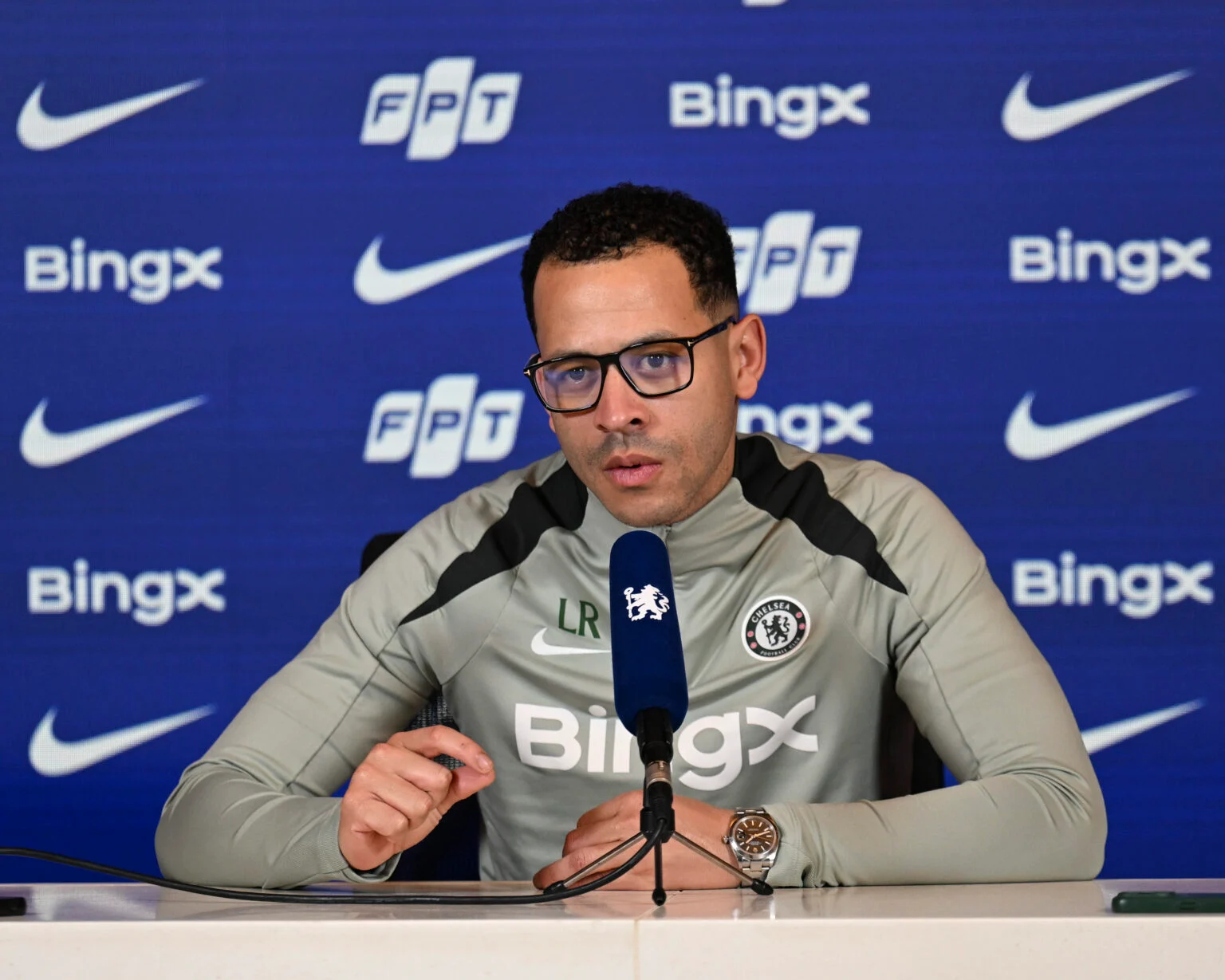
“It’s not just the scoreline; it’s the body language. The scoreline says it all about Liam Rosenior—he hasn’t convinced these players he belongs at this level” — A sensational halftime critique from Gary Neville has identified a “disturbing trend” in Chelsea’s performance against Brighton. Reports suggest that one ‘Fantastic’ superstar was seen arguing with the bench as they headed down the tunnel.
'The Scoreline Says It All About Rosenior': Neville's Brutal Half-Time Verdict as Chelsea's Season Spirals at Brighton

The Amex Stadium has become a graveyard for Chelsea’s Champions League aspirations. Within two minutes of kick-off, Ferdi Kadioglu had headed Brighton into a lead that would prove unassailable, and by half-time, the visitors were not just losing—they were being dismantled . With just 29% possession, zero shots on target, and a body language that spoke of a team that had already surrendered, Chelsea’s fourth consecutive Premier League defeat felt inevitable long before the final whistle .
**”It’s not just the scoreline; it’s the body language. The scoreline says it all about Liam Rosenior—he hasn’t convinced these players he belongs at this level.”**
That devastating half-time critique from Gary Neville, delivered as the Blues trudged off the pitch trailing 1-0, has sent shockwaves through the football world . The former Manchester United captain identified a “disturbing trend” in Chelsea’s performance—a lack of fight, a lack of organisation, and a worrying disconnect between the manager and his players. Reports from the tunnel suggest that one “fantastic” superstar was seen arguing with the bench as they headed down the tunnel, a moment that encapsulates the chaos engulfing Stamford Bridge .
## The First-Half Horror Show: Brighton Dominate from the First Whistle
The script was written within 180 seconds. Brighton’s corner found its way to the near post, where Jorrel Hato failed to clear decisively. The ball deflected invitingly to Ferdi Kadioglu, whose first-time finish found the back of the net despite a deflection . Robert Sanchez, who had been shaky throughout the opening exchanges, could only watch as the ball nestled in his net.
From that moment, Chelsea never recovered. The statistics from the opening 45 minutes are damning:
– **Possession:** Brighton 71% – Chelsea 29%
– **Total shots:** Brighton 4 – Chelsea 0
– **Shots on target:** Brighton 3 – Chelsea 0
– **Expected Goals (xG):** Brighton 0.33 – Chelsea 0.00
Chelsea’s attacking output was non-existent. Without the injured Cole Palmer—ruled out due to “tightness in his hamstring”—and the still-recovering João Pedro, the Blues had no creative spark . Liam Delap, starting up front, touched the ball only twice in dangerous areas. Enzo Fernandez, pushed further forward in a desperate tactical shift, was anonymous . Pedro Neto, deployed as a support striker, could not influence the game .
The midfield was overrun. Carlos Baleba and Pascal Gross controlled the tempo for Brighton, while Moises Caicedo—playing against his former club—looked lost alongside the returning Romeo Lavia . The decision to start Lavia, who has struggled for fitness all season, backfired spectacularly as he failed to provide the defensive cover required.
Neville’s observation about “body language” was most visible in the defensive line. Wesley Fofana, already under scrutiny after his petulant reaction to being substituted against Manchester United, looked disinterested . He had already been booked by the 27th minute, and his frustration was palpable .
## The “Disturbing Trend”: Players Hiding, Rosenior Powerless
Neville’s claim that Rosenior “hasn’t convinced these players he belongs at this level” is supported by the visible disconnect between the manager’s pre-match rhetoric and the team’s on-field reality.
Just 24 hours earlier, Rosenior had stood before the media and delivered a passionate plea. **”It’s about character now; it’s about standing up. It’s about people who are willing, in difficult moments, to stand up for the shirt and fight. That’s what I’m looking for,”** he had declared . He spoke of “belief and keeping the faith,” of working hard to “turn things around” .
Against Brighton, his players offered none of that. They were second to every loose ball. They lost every physical duel. They retreated into a defensive shell, seemingly content to keep the scoreline respectable rather than fight for a way back into the game.
The “disturbing trend” Neville identified is the cumulative effect of weeks of dysfunction. Chelsea have now lost four consecutive league matches for the first time since May 2023, conceding 14 goals in the process while scoring just three . Their form since Rosenior’s appointment places them ninth in the Premier League table based on results—only a marginal improvement on the Enzo Maresca era that preceded it.
Rosenior’s pre-match admission that he “needs to get results now” has taken on a grim irony . Acknowledging that four consecutive league defeats is “not good enough” does not excuse a fifth. And when the performance is as passive as this, the manager’s position becomes increasingly untenable.
## The Tunnel Argument: Superstar vs. Bench
The most explosive detail to emerge from the half-time whistle is the report that a “fantastic” superstar was seen arguing with the bench as the players headed down the tunnel .
While the player’s identity remains officially unconfirmed, the context points toward **Wesley Fofana**. The French defender was booked early, looked off the pace throughout the first half, and has a recent history of disciplinary issues . Just days earlier, Rosenior had admitted that Fofana “apologised for his reaction” after storming down the tunnel when substituted against Manchester United .
**”Wes is a very emotional character in a good way. He’s not afraid to wear his heart on his sleeve,”** Rosenior had said, defending his player . But the manager also conceded that Fofana “could have showed his emotion in a better way” .
If Fofana was again involved in a confrontation with the bench, it would represent a pattern of indiscipline that Rosenior cannot control. For a manager already struggling to impose his authority on a fractured dressing room, losing the respect of senior players is fatal.
Other potential candidates include **Enzo Fernandez**, who has been visibly frustrated in recent weeks and has openly flirted with a move to Real Madrid . The vice-captain was deployed in an advanced role against Brighton but failed to influence the game. If he was seen arguing with the bench, it would confirm the growing perception that he believes Chelsea are falling short of his ambitions.
**Romeo Lavia**, making a rare start, could also have been the culprit. The midfielder has struggled to justify his big-money move, and his body language has often been negative when things are not going his way.
## Rosenior’s Defiance: “I Believe in Them”
Despite the mounting evidence of a team in crisis, Rosenior has refused to publicly condemn his players. In the buildup to the Brighton match, he insisted that he still believes in the squad, even as he acknowledged the gravity of the situation .
**”It’s about character now; it’s about standing up. It’s about people who are willing, in difficult moments, to stand up for the shirt and fight. That’s what I’m looking for,”** he had said .
**”But I believe in them, and I believe that we can come through this period so much stronger, but we have to get this part right now”** .
The manager has also tried to downplay the significance of the tunnel confrontation, arguing that emotions run high in difficult moments and that his players are “young” and still learning . He revealed that the coaching staff is doing work with the group that “is not football” – focusing on psychological resilience and character development .
But for fans watching the Amex horror show, these words ring hollow. Chelsea are not a “young group” learning on the job; they are a squad assembled at a cost of over £1.5 billion, packed with internationals and World Cup winners. Excuses about age and inexperience no longer wash when the performance is this passive.
Neville’s half-time verdict—that the “scoreline says it all about Rosenior”—reflects a growing consensus that the manager is out of his depth. A 1-0 deficit is not insurmountable, but the manner of the performance suggested a team that had already accepted defeat. The players were not fighting for their manager; they were hiding from the fight.
## The Numbers That Condemn: A Season in Freefall
Chelsea’s 2025-26 campaign is now statistically one of the worst in the club’s modern history. The defeat to Brighton, if it holds, would represent:
– **Fifth consecutive league defeat** – equalling the club’s worst-ever losing streak in the Premier League era, set in November 2023
– **No goals in five league matches** – Chelsea have failed to score against Everton, Manchester City, Arsenal, Manchester United, and now Brighton, a run of 450+ minutes without a goal
– **15 goals conceded in five matches** – an average of three per game, a defensive record that borders on the farcical
– **Sixth place in the table** – seven points adrift of the Champions League places with just four games remaining
The financial implications are staggering. Missing out on Champions League qualification for the second consecutive season would cost Chelsea an estimated £100 million in revenue—a blow that would compound the club’s existing financial struggles, including a £262.4 million pre-tax loss announced for the 2024/25 financial year .
The sporting implications are even worse. Without the lure of Champions League football, Chelsea’s ability to attract—and retain—top talent will be severely compromised. Enzo Fernandez may push for his Real Madrid move. Cole Palmer, despite being deemed “unsellable,” will generate unwelcome transfer speculation. And the cycle of rebuilds will continue, with no end in sight.
## The Verdict: A Season That Died at the Amex
**”It’s not just the scoreline; it’s the body language. The scoreline says it all about Liam Rosenior—he hasn’t convinced these players he belongs at this level.”**
Gary Neville’s words will echo through Stamford Bridge for the remainder of the season. The former Manchester United captain has drawn a line in the sand: Rosenior’s inability to motivate his players, to organise his team, to earn the respect of the dressing room—these are not temporary issues. They are fundamental flaws that prove he is not equipped for the job.
The first half at the Amex was a disaster. The 1-0 deficit was bad enough, but the manner of the performance—the lack of fight, the lack of organisation, the visible disconnect between the manager and his players—was the real indictment. For Neville, watching from the studio, the evidence was finally conclusive.
Liam Rosenior may still guide Chelsea to a top-half finish. He may still survive the summer, backed by an ownership that has publicly expressed confidence in him . But in the eyes of one of the Premier League’s most respected pundits, the permanent job is now beyond him. The “disturbing trend” of passive performances, of players hiding from responsibility, of a manager powerless to inspire—these are the hallmarks of a tenure that has run its course.
The “fantastic” superstar seen arguing with the bench as they headed down the tunnel is merely a symptom of the disease. The dressing room is fractured. The tactics are non-existent. The results are catastrophic.
At Stamford Bridge, the “project” is not just failing—it is actively collapsing. And Gary Neville has made his position unmistakably clear: the blame lies not with the players, but with the manager who cannot convince them to fight.
The final whistle at the Amex will bring this horror show to an end. But the questions it raises—about Rosenior, about the players, about the ownership—will linger long into the summer. Chelsea are not just losing games; they are losing their identity. And unless something changes, and quickly, the “slow death” Gary Neville warned about will continue unabated.
