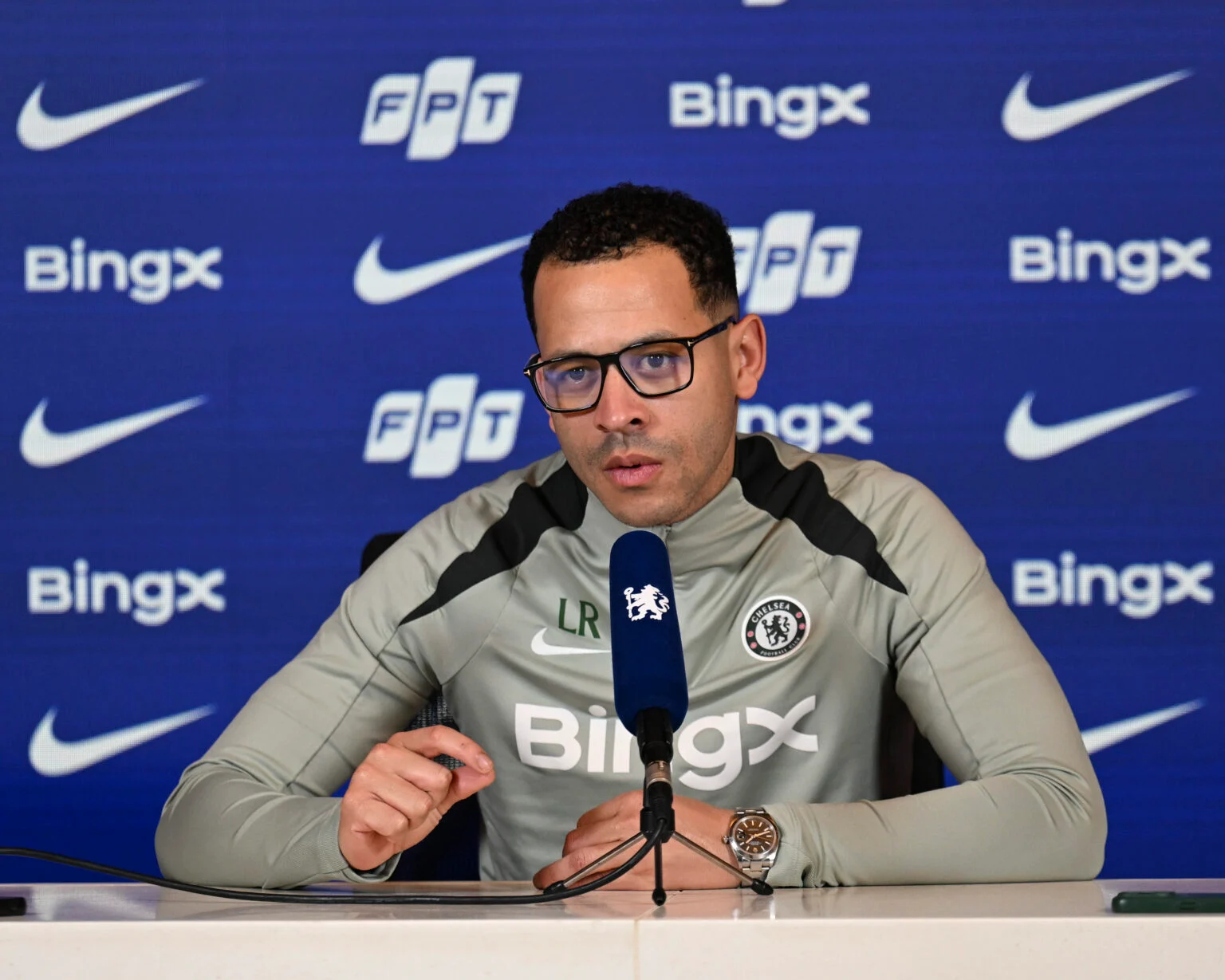
“I was told we were building for the future, but how can we build when our pillars keep breaking? I’m worried that these constant injuries are starting to affect their long-term careers” — Liam Rosenior has sent a chilling warning to the board after a ‘fantastic’ young defender succumbed to a fresh muscle tear in training. Insiders disclose that one star may not return until the start of the New Year.
'How Can We Build When Our Pillars Keep Breaking?': Rosenior's Chilling Injury Warning Exposes Chelsea's Fragile Foundation

The optimism that accompanied Liam Rosenior’s appointment has curdled into a grim acceptance of football’s cruelest reality. After a ‘fantastic’ young defender succumbed to a fresh muscle tear in training, the Chelsea manager has delivered a chilling warning to the board—one that speaks to the existential crisis threatening to derail the club’s long-term project.
**”I was told we were building for the future, but how can we build when our pillars keep breaking? I’m worried that these constant injuries are starting to affect their long-term careers.”**
Those words, reportedly delivered in the aftermath of yet another training-ground setback, zero in on the physical fragility that has become the defining theme of Chelsea’s 2025-26 campaign. The identity of the latest victim? **Jamie Gittens**—the 21-year-old winger who has now suffered his **third hamstring injury of the season**, casting serious doubt on his availability for the remainder of the campaign .
## The Fresh Casualty: Gittens’ Nightmare Season Continues
The scene at Cobham has become depressingly familiar. Gittens, who had been expected to make his long-awaited return from a hamstring tear against Newcastle in March, felt his muscle go again during the final training session before the match . His reaction told the story of a young man who has lost count of his setbacks.
**”Jamie (Gittens) was due back on the bench, and he felt his hamstring late after training yesterday, so we’re just checking up on him,”** Rosenior revealed after the 1-0 defeat to Newcastle, the frustration palpable in his voice .
The 21-year-old has now missed Chelsea’s last **10 games** after initially tearing his hamstring during the 3-2 win over West Ham in January . This latest setback is the **third time** the same injury has recurred—a pattern that has left medical staff searching for answers and Rosenior publicly acknowledging the severity of the situation.
**”It’s a real shame for him, I think it’s the third time it’s happened. We need to help him and we need to make sure he’s okay. I can’t give you a time frame on that at the moment,”** the manager admitted, his refusal to set a return date speaking volumes about the uncertainty surrounding the player’s recovery .
## The Gittens Context: A ‘Fantastic’ Talent Being Wasted
The tragedy of Gittens’ situation extends beyond the immediate frustration of a missing player. When fit, the former Borussia Dortmund winger has been one of Chelsea’s most dangerous attacking weapons—a player capable of unlocking the low blocks that have frustrated Rosenior’s side throughout the campaign .
His absence has been acutely felt. In Chelsea’s recent matches without him, the attack has lacked the urgency and directness required to break down stubborn defenses . Rosenior has been careful not to make excuses, but the subtext of his comments is unmistakable: **”You’re missing three of our most important players in terms of unlocking a low block, which is your wingers”** .
The fear now is that Gittens may not return until the start of the **New Year**. With the season entering its final phase, and Chelsea’s Champions League qualification hopes hanging by a thread, the loss is almost too cruel to contemplate.
## The Worrying Trend: ‘Pillars’ Crumbling Across the Squad
Gittens is far from alone. The Chelsea treatment room has become a revolving door for key players, and Rosenior’s reference to “pillars” breaking captures the cumulative toll of a season defined by physical attrition.
### The Captain’s Curse: Reece James
Reece James, the club captain and emotional heartbeat of the squad, has been restricted to just 14 league appearances this season . His latest setback—a hamstring injury suffered in the defeat to Newcastle—has kept him sidelined since March 14, with Rosenior refusing to put a timeline on his return .
**”With a hamstring injury, it is never great and for Reece we can hopefully get him scanned, find out the full extent,”** Rosenior said, the weariness in his voice reflecting years of watching his captain battle the same physical demons .
For a player of James’ quality—arguably the best right-back in the world when fully fit—the constant interruptions have raised uncomfortable questions about whether his body can withstand the demands of elite football.
### The Colwill Absence: A Season Lost
Levi Colwill, the 23-year-old defender viewed as the long-term future of Chelsea’s backline, has not made a **single appearance** this season. An anterior cruciate ligament injury suffered in the very first training session of the pre-season campaign ruled him out before a ball was even kicked .
Colwill’s return is now targeted for late April or May, but even that timeline remains uncertain . A full season without one of the club’s most promising homegrown talents is a devastating blow to the project Rosenior is trying to build.
### The Chalobah Blow
Trevoh Chalobah, who has been a key figure in defence this season, was stretchered off during the Champions League defeat to Paris Saint-Germain with what was initially feared to be a season-ending injury . Fortunately, scans revealed a high ankle sprain rather than a fracture, but the 26-year-old is still expected to miss approximately **six weeks** .
**”It wasn’t until after the game that I saw the image. Then you’re really worried for the next day,”** Rosenior admitted, capturing the anxiety that accompanies every injury to a key player .
### The Jorgensen Surgery
Even the backup goalkeeper has not been spared. Filip Jorgensen, who had been pushing Robert Sanchez for the starting role, underwent minor groin surgery after a scan revealed the need for an operation . He is expected to return in late April .
## The ‘Long-Term Career’ Fear: What Rosenior Isn’t Saying
Rosenior’s admission that he is worried about these injuries **”starting to affect their long-term careers”** is the most chilling element of his warning. He is not merely concerned about missing players for a few weeks; he is acknowledging the possibility that the physical toll of repeated setbacks could permanently diminish the potential of some of Chelsea’s most talented assets.
The medical literature on recurring hamstring injuries is sobering. Each subsequent tear increases the likelihood of further recurrence, and players who suffer multiple hamstring injuries often experience a permanent reduction in explosive speed—the very attribute that makes wingers like Gittens so dangerous .
For a player of Gittens’ age—just 21—to have suffered three hamstring injuries in a single season is alarming. For Reece James, whose career has been defined by the battle between his undeniable talent and his fragile body, the cumulative toll is already visible.
**”I’m worried that these constant injuries are starting to affect their long-term careers.”**
Rosenior’s words are not hyperbole; they are a sober assessment of a crisis that threatens to undermine everything Chelsea are trying to build.
## The Recruitment Question: Is the Medical Department to Blame?
The pattern of injuries at Chelsea has led to uncomfortable questions about the club’s recruitment and medical strategies. The summer spending spree that brought in Joao Pedro, Jamie Gittens, Jorrel Hato, and others was celebrated as a statement of intent . But the subsequent injury crisis has exposed the fragility of a squad built on potential rather than proven durability.
The club’s reliance on young players—many of whom are still physically developing—may be contributing to the problem. The demands of the Premier League are relentless, and players who are not yet physically mature are more susceptible to soft-tissue injuries .
Rosenior has publicly backed the youngsters who have been thrust into action, with Jorrel Hato earning particular praise for his composure under pressure . But the manager’s warning to the board suggests he believes the squad needs more than just talented teenagers; it needs **durable, experienced players** who can withstand the rigors of a long campaign.
## The Board’s Dilemma: Patience or Panic?
The timing of Rosenior’s warning is significant. Chelsea are sixth in the Premier League, six points adrift of the top four, with only seven games remaining . The Champions League qualification that the club’s summer spending was designed to secure is now in serious doubt.
The board must now decide whether to back Rosenior with significant investment in the summer or to accept that the “project” requires more patience than originally anticipated. The manager’s words suggest he believes the current squad—particularly the injury-prone “pillars”—cannot be relied upon to deliver the consistency required to compete at the highest level.
**”I was told we were building for the future, but how can we build when our pillars keep breaking?”**
The question is rhetorical, but the answer will define Chelsea’s trajectory for years to come.
## The Verdict: A Crisis That Defies Easy Solutions
**”I was told we were building for the future, but how can we build when our pillars keep breaking? I’m worried that these constant injuries are starting to affect their long-term careers.”**
Liam Rosenior’s words capture the existential crisis facing Chelsea Football Club. This is not a tactical problem or a recruitment failure; it is a fundamental challenge of physical resilience that no amount of coaching or spending can easily solve.
Jamie Gittens may not return until the New Year. Reece James has become a permanent resident of the treatment room. Levi Colwill has lost an entire season. And the cumulative toll of these absences has left Chelsea’s “project” teetering on the brink of collapse.
The manager has delivered his warning. The board must now decide whether to listen—and what to do about a problem that has no easy answers.
At Stamford Bridge, the future was supposed to be bright. But with their pillars crumbling, the foundations are starting to shake.
