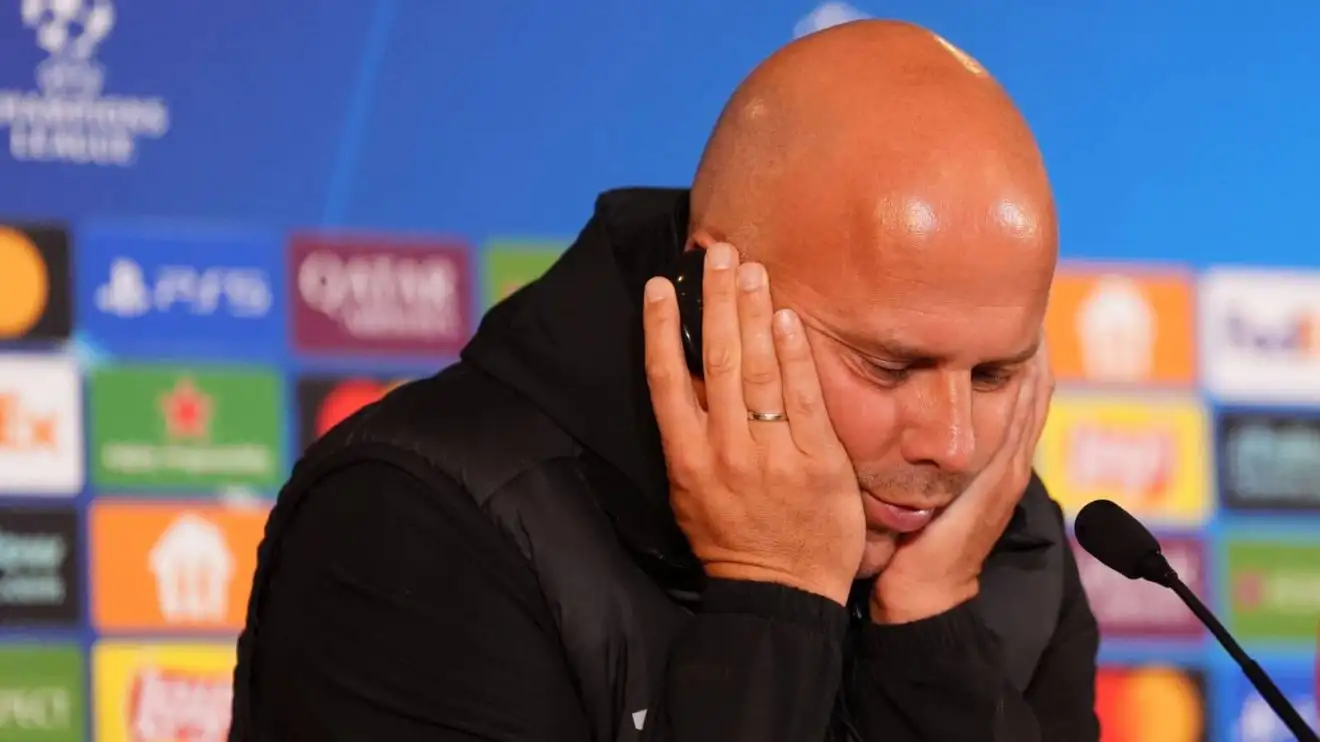
“They clearly, clearly want to get to the end of the season with him, but the atmosphere is becoming toxic. The decision is made, the plan is in place, and the replacement is ready to sign. It’s just a matter of time now”, David Lynch drops a bombshell on the ‘Secret Agreement’ to bin Arne Slot
The Poisoned Chalice: Inside the "Secret Agreement" to End the Arne Slot Era at Anfield

The Poisoned Chalice: Inside the “Secret Agreement” to End the Arne Slot Era at Anfield
A pall of inevitability has descended over Anfield, thicker and more suffocating than the Merseyside fog. What began as a bold new chapter under Arne Slot—a meticulously chosen successor tasked with evolving, not erasing, a golden era—has curdled into a tenure defined by tension, tactical dissonance, and a palpable erosion of the famous “Anfield atmosphere.” According to a bombshell report from journalist David Lynch, the club’s leadership has now moved beyond private concern to concrete, clandestine planning. A decision of seismic consequence has been reached in the halls of power, one that spells the imminent end of the Dutchman’s tumultuous reign.
**”They clearly, clearly want to get to the end of the season with him,”** Lynch reports, highlighting the club’s desperate desire for stability and a dignified conclusion. It is a holding action, an attempt to prevent a chaotic, mid-season collapse. But this desire is crashing against an immutable, toxic reality: **”but the atmosphere is becoming toxic.”** This toxicity is the killer blow. It speaks to a fracture that goes beyond points dropped or flawed tactics; it indicates a breakdown in the sacred bond between team, manager, and support—the very energy that fuels the club at its best.
The report then delivers the trilogy of facts that confirm this is not mere speculation, but a operational reality. **”The decision is made, the plan is in place, and the replacement is ready to sign.”** This is the anatomy of a cold, corporate coup. The emotional and sporting verdict has been passed (“decision is made”). The logistical and financial roadmap for the transition has been drafted (“plan is in place”). And most damningly, the succession is already secured (“replacement is ready to sign”). This reveals a level of premeditation that confirms Slot is now merely a dead man walking, presiding over a countdown he may not even be fully aware of.
The final, chilling note is one of resigned execution: **”It’s just a matter of time now.”**
The “Toxic Atmosphere”: A Multifaceted Poison
The “toxic atmosphere” Lynch describes is likely a compound effect. On the pitch, it may stem from a perceived tactical rigidity that stifles the players’ instincts, or a game model that has failed to translate from the Eredivisie to the Premier League’s ferocious intensity. In the stands, it is the sound of restless frustration replacing the defiant roar, a growing disconnect between the fanbase’s identity and the team’s presentation. Within the dressing room, it could be a loss of belief in the project, with senior players confused by instructions or disillusioned by results. This toxicity is a virus; it infects performances, which then deepens the disillusion, creating a vicious, inescapable cycle.
The “Secret Agreement” and the “Ready” Replacement
The notion of a **”secret agreement”** and a **ready-to-sign replacement** paints a picture of a board that has lost all faith. They are not weighing options; they have chosen their path. The “agreement” likely exists between key decision-makers—perhaps Fenway Sports Group’s (FSG) principal owner John W. Henry, CEO of Football Michael Edwards, and Sporting Director Richard Hughes—to enact the change once a specific, minimally disruptive trigger point is reached, be it mathematical elimination from a competition or the final whistle of the season.
The identity of the replacement, “ready to sign,” suggests a manager currently unattached or whose contract situation allows for a swift, clean move. This points away from a currently employed elite coach and towards a proven, available tactician who can step in immediately—a figure like the ever-available **Thomas Tuchel**, a returning **Xabi Alonso** (should his Bayer Leverkusen project end), or another manager whose philosophy is seen as a restorative fit for the squad’s core. The readiness indicates advanced, and perhaps even unauthorized, talks have taken place, underscoring the determination of the move.
## The Endgame: A Managed Demise or an Implosion?
The club’s hope to “get to the end of the season” is a fraught strategy. It risks the toxicity metastasizing, damaging player morale and asset values, and turning the final months into a joyless, acrimonious procession. Yet, a mid-season sacking brings its own chaos. The “plan in place” will be designed to navigate this tightrope: to manage the public messaging, to steady the squad with assistant coaches, and to ensure the new manager inherits a platform, not a crater.
Conclusion: The Unraveling of a Project
David Lynch’s report is not a rumor; it is an obituary for a project that has failed to take root. It reveals a Liverpool hierarchy that has already conducted the autopsy and scheduled the funeral. Arne Slot is not being given time to turn things around; he is being given time to serve out a notice period.
The “secret agreement” is the sound of a club protecting its future, making a ruthless but perhaps necessary calculation. The coming weeks and months at Anfield will no longer be about whether Slot can succeed, but about how and when the succession he was once a part of will be finalized. The legacy of his appointment is now one of profound dissonance, a stark reminder that at the very highest level, the Anfield atmosphere is not a bonus—it is the essential, non-negotiable lifeline. And once it turns toxic, there is no antidote, only an exit.
