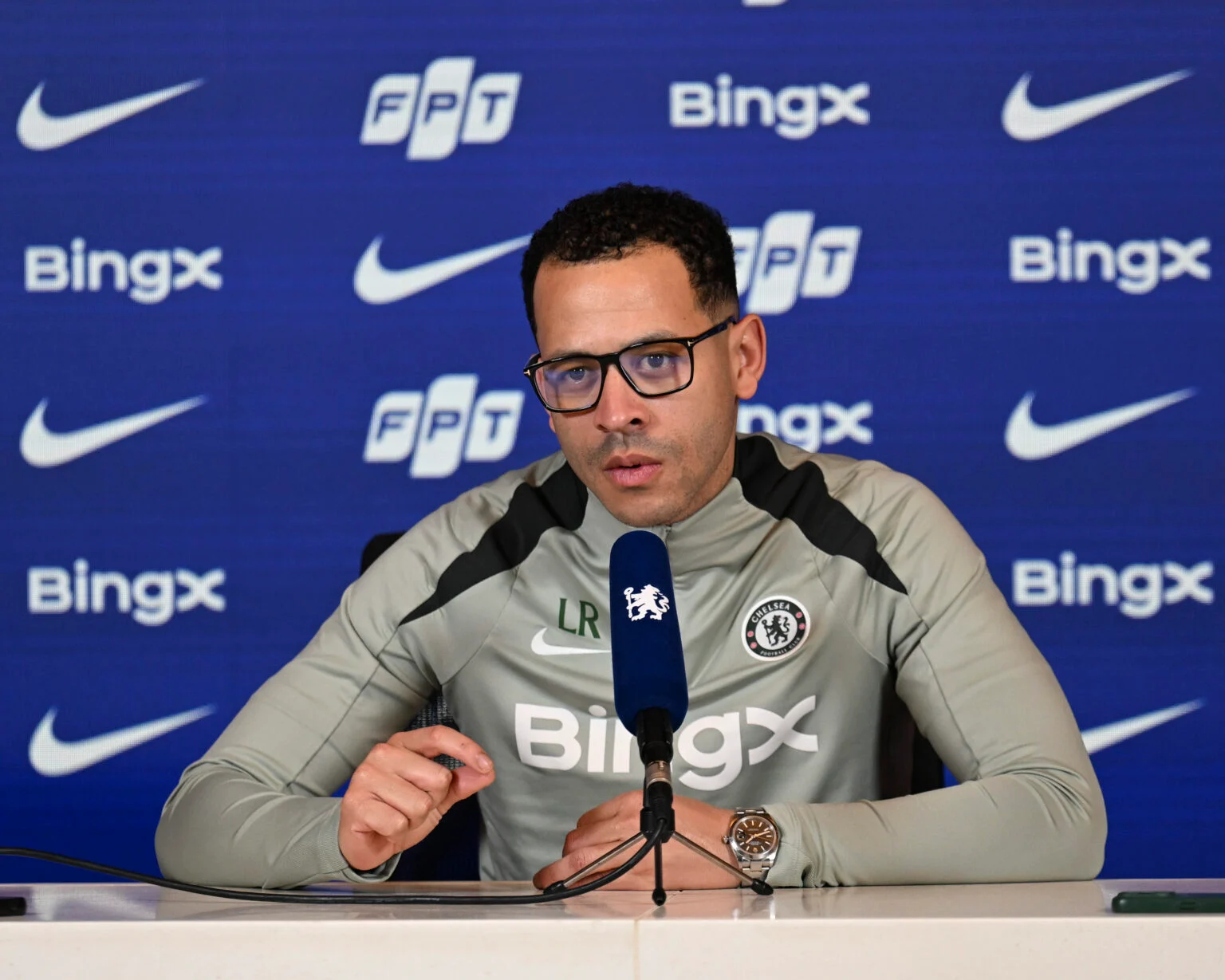
“Judge me on my claps, not my press conferences. If the players can’t hear my applause, how can they perform?”, Liam Rosenior drops a bombshell defensive of his training ground antics that has Chelsea fans demanding a “real manager” immediately
The Unconventional Verdict: Liam Rosenior's Audible Antics and the Boiling Pressure at Stamford Bridge

The Unconventional Verdict: Liam Rosenior’s Audible Antics and the Boiling Pressure at Stamford Bridge
In the high-stakes, pressure-cooker world of the Premier League, the metrics by which a manager is judged are as diverse as they are demanding. Points per game, expected goals, tactical setups, and transfer market acumen are scrutinized under the unforgiving microscope of public and punditry. But for one figure, thrust into the interim hot seat at one of world football’s most tumultuous institutions, the criteria for assessment have taken a bewildering and, to many, baffling turn. Liam Rosenior, tasked with steadying the listing ship at Chelsea, has issued a defiant, headline-grabbing retort to his growing chorus of critics—a statement that has less to do with tactics on the pitch and everything to do with acoustics off it.
“Judge me on my claps, not my press conferences,” Rosenior reportedly declared in a passionate defence of his training-ground demeanour. “If the players can’t hear my applause, how can they perform?” This seemingly paradoxical statement, a bombshell dropped into the already choppy waters of Stamford Bridge, is far more than a quip. It is a philosophical manifesto, a deliberate provocation, and a Rorschach test that has split the Chelsea fanbase, with a vocal faction now demanding the immediate appointment of a “real manager.”
Deconstructing the Clap: Rosenior’s Philosophy of Audible Affirmation
To dismiss Rosenior’s statement as mere eccentricity is to miss its pointed intent. In an era where managers are often judged by their media soundbites—their ability to deflect blame, spar with journalists, and project an aura of unflappable control—Rosenior is actively rejecting that paradigm. He is arguing that the true measure of his impact is not found in the press room’s verbal jousting, but in the visceral, immediate environment he creates for his players on the training pitch.
His focus on “claps” is symbolic of a broader coaching ethos rooted in positive reinforcement, constant communication, and an almost palpable energy. The logic, as he posits, is simple yet profound: a player’s confidence, particularly in a squad brimming with young, expensive talent struggling for form, is a fragile construct. Rosenior’s audible, enthusiastic applause is positioned not as empty encouragement, but as a critical feedback mechanism—a real-time, sonic validation of correct decisions, successful executions, and effort expended. In his view, if this reinforcement isn’t heard, felt, and internalized, the player’s performance foundations remain shaky. He is, in essence, selling himself as a cultivator of confidence through decibels.
The Chelsea Context: A Clash of Cultures at the Bridge
This philosophy, however, has collided with the fraught reality of modern Chelsea. The club, under its new ownership, is a spectacle of radical upheaval—a sprawling, expensive project in search of an identity. The fanbase, steeped in the successes of the pragmatic, iron-willed eras of Mourinho and Conte, often values visible grit, clear tactical instruction, and a steely public persona above all else. For many supporters, Rosenior’s focus on “claps” epitomizes a perceived softness, a lack of the hard-edged, win-at-all-costs mentality they crave.
The resultant demand for a “real manager” is a cry for a return to a familiar archetype: the authoritarian tactician, the gruff motivator, the media-savvy operator who commands respect through fear and results, not through perceived permissiveness. Rosenior’s interpersonal, energy-based approach is seen by this faction as ill-suited to a dressing room that some believe requires discipline more than encouragement, and clear tactical drilling more than audible affirmation.
The Deeper Divide: Performance vs. Perception
The raging debate exposes a fundamental tension in modern football management. Is a manager’s primary role to be an external shield and spokesman, or an internal cultivator and motivator? Rosenior is unequivocally choosing the latter, staking his reputation on the belief that fostering the right internal environment is the prerequisite for external success. His critics argue that at an elite club like Chelsea, both are non-negotiable, and that his perceived shortcomings in the public-facing role undermine his entire project.
Furthermore, the situation lays bare the uncomfortable transition at Chelsea. The club’s strategy of acquiring prodigious young talent necessitates a manager who is a developer, a teacher, and a psychologist—roles that align with Rosenior’s stated methods. Yet, the relentless demand for immediate results at the very top level often calls for a finished-product manager who can impose a rigid system. Rosenior is caught in this existential cleft.
Conclusion: Applause as Artillery in a War of Ideologies
Liam Rosenior’s defiant stand is more than a defence of his coaching style; it is a declaration of war on traditional assessment criteria. By asking to be “judged on my claps,” he is challenging observers to look beyond the press conference platitudes and into the unseen, heard dynamics that fuel performance. He is betting that the audible culture of confidence he is building will eventually translate into audible cheers at Stamford Bridge.
Whether this philosophy can survive in the cauldron of expectation at Chelsea remains the paramount question. For now, the sound ringing around Cobham is not just that of Rosenior’s applause, but the deafening clash of footballing ideologies. One side hears the sound of modern man-management; the other hears the echo of a lacking ruthlessness. In this high-stakes standoff, the final judgment on Rosenior will not be delivered by pundits in studios, but by whether his players, having clearly heard his applause, finally start giving the fans something to roar about.
