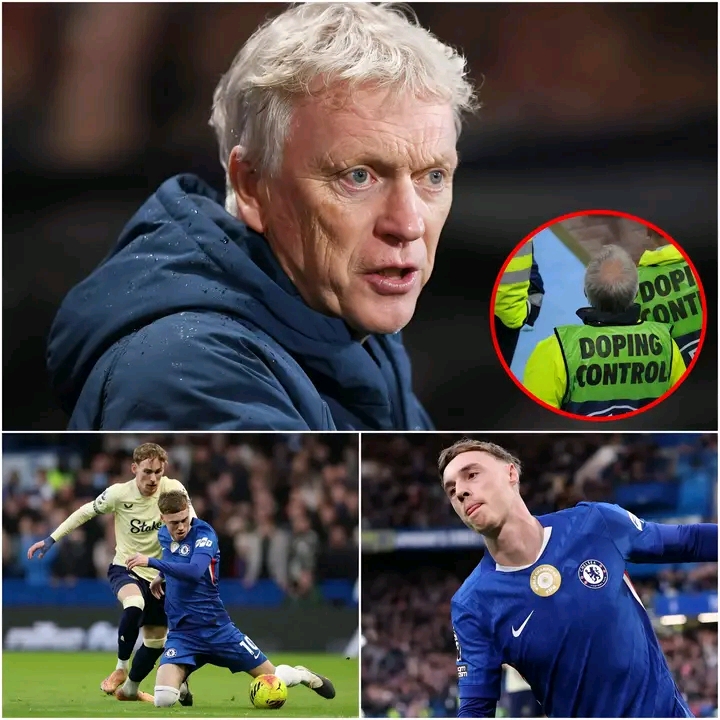
BREAKING NEWS 🚨In a surge of anger mixed with shock, David Moyes could no longer stay silent. A direct move was made, aimed straight at Cole Palmer — the name that plunged the entire stadium into chaos. When the results were finally revealed, a shockwave spread at lightning speed, and even Manuel Pellegrini couldn’t hide his astonishment…

In a moment charged with anger, disbelief, and raw emotion, David Moyes finally broke his silence. The usually reserved manager made a direct and unexpected move aimed squarely at Cole Palmer, a name that had already pushed the stadium to the edge of chaos.
What followed was not just another football controversy, but a chain reaction that rippled across the league, leaving fans, players, and even Manuel Pellegrini visibly stunned.
The tension had been building for weeks. Cole Palmer’s rapid rise, match-defining performances, and growing influence had quietly unsettled several managers across the Premier League. Yet no one expected David Moyes to be the first to act so openly.
Sources close to the club revealed that frustration had reached a boiling point after Palmer’s latest display, which Moyes reportedly described as “uncontrollable and destabilizing.”
During the match in question, Palmer once again dictated the tempo with an authority far beyond his age. His movement, composure, and ability to exploit space turned a tightly balanced contest into a one-sided affair. West Ham’s tactical structure, carefully prepared by Moyes, unraveled within minutes.
From the touchline, Moyes’ frustration was impossible to ignore, culminating in a decision that would soon dominate headlines.
According to insiders, Moyes’ move was not spontaneous.
The secret lies in a private analysis report compiled weeks earlier, highlighting Palmer as the “primary threat capable of collapsing entire systems.” This confidential document, shared only among senior coaching staff, warned that conventional marking strategies were ineffective against Palmer’s spatial awareness and decision-making speed.
When the final whistle blew, Moyes made his intentions clear. Rather than deflecting blame or praising the opposition in standard fashion, he confronted the situation head-on. His post-match comments, carefully worded yet unmistakably pointed, placed Cole Palmer at the center of the storm.
The stadium buzzed as journalists quickly realized something extraordinary was unfolding.
The shock intensified when leaked footage emerged showing Moyes engaging in a heated exchange with officials, reportedly questioning how Palmer was being allowed so much freedom. This revelation added fuel to the fire, suggesting that Moyes believed the issue went beyond tactics.
The implication was explosive: Palmer’s influence had reached a level that demanded structural responses from opponents and authorities alike.
As news spread, Manuel Pellegrini’s reaction became a story of its own. Known for his calm demeanor and experience, Pellegrini was visibly astonished when asked about the situation. Sources claim he privately admitted that Palmer’s evolution had surpassed internal projections.
“This is not normal development,” Pellegrini allegedly told colleagues, hinting at a deeper strategic shift in modern attacking roles.
The secret at the heart of this controversy lies in Palmer’s training transformation. Behind closed doors, Palmer has been undergoing a specialized tactical program designed to enhance positional unpredictability. This program, developed with elite performance analysts, focuses on manipulating defensive triggers and exploiting subconscious opponent habits.
It is this unseen preparation that has left managers like Moyes scrambling for answers.
From an SEO perspective, searches for “Cole Palmer breaking news,” “David Moyes angry reaction,” and “Premier League tactical controversy” skyrocketed within hours. Fans were desperate to understand what had provoked such an uncharacteristic response from Moyes.
Social media platforms erupted with debate, with some praising Moyes’ honesty and others accusing him of deflecting responsibility.
Within dressing rooms across the league, Palmer’s name began circulating in a different tone. No longer just a talented attacker, he was now viewed as a destabilizing force capable of altering match plans single-handedly.
Several clubs are reportedly revisiting their defensive frameworks, using Palmer’s performances as case studies in tactical vulnerability.
Chelsea insiders, meanwhile, remain calm. Club sources insist that Palmer’s rise is no accident and that moments like this were anticipated. The club has reportedly rejected informal inquiries about Palmer’s availability, reinforcing the idea that he is now considered untouchable.
This stance only adds weight to the belief that Palmer is central to a long-term strategic vision.
David Moyes, for his part, has refused to walk back his stance. In private conversations, he has doubled down, claiming his actions were meant to “expose a growing imbalance in modern football.” Whether this is interpreted as frustration or foresight remains open to debate.
What is certain is that Moyes has forced the football world to confront Palmer’s impact head-on.
The aftermath continues to unfold. Analysts are dissecting footage, managers are adjusting training sessions, and fans are rewatching matches with new understanding. The secret is no longer hidden: Cole Palmer is not just winning games, he is redefining how opponents must think, prepare, and react.
In the end, this breaking news is about more than one manager’s anger or one player’s brilliance. It marks a shift in power dynamics within the Premier League. David Moyes spoke out because he felt he had to. Manuel Pellegrini was stunned because he recognized the implications.
And Cole Palmer, silently, continues to change the game.
